Tor Publishing Group pulled a book cover on Nov. 20, 2026. The art was for "This Crown Will Not Rule Me," the next novel from the writing team known as Ilona Andrews. Readers flagged something off first.
Two Instagram artists, Markova and Zakuga Art, named the signs. Tor confirmed it: generative AI made the image1.
Tor already had a contract clause against AI art. The clause missed the problem. A reader's eye caught it instead1.
A Clause That Needed a Fan to Work
Ilona Andrews is the pen name for the married writing team of Ilona and Gordon Andrews. The pair asked fans to wait while Tor checked the art1.
Tor's own statement named the stakes plainly. "Tor Publishing Group has learned that generative AI was used in the creation of the cover art for This Crown Will Not Rule Me, without the knowledge of either Tor or of the authors," the publisher wrote1.
The statement said Tor would pull the cover and tighten its review before the next commissioned piece. Ilona Andrews backed the fix. "We have a no-AI clause in our contract. Tor also has a no-AI clause in their art contracts. Everyone wanted to be thorough," the team wrote1.
Tor's Third Time Since 2022
Tor had hit this problem before. Christopher Paolini's "Fractal Noise" drew the same complaint in November 20222.
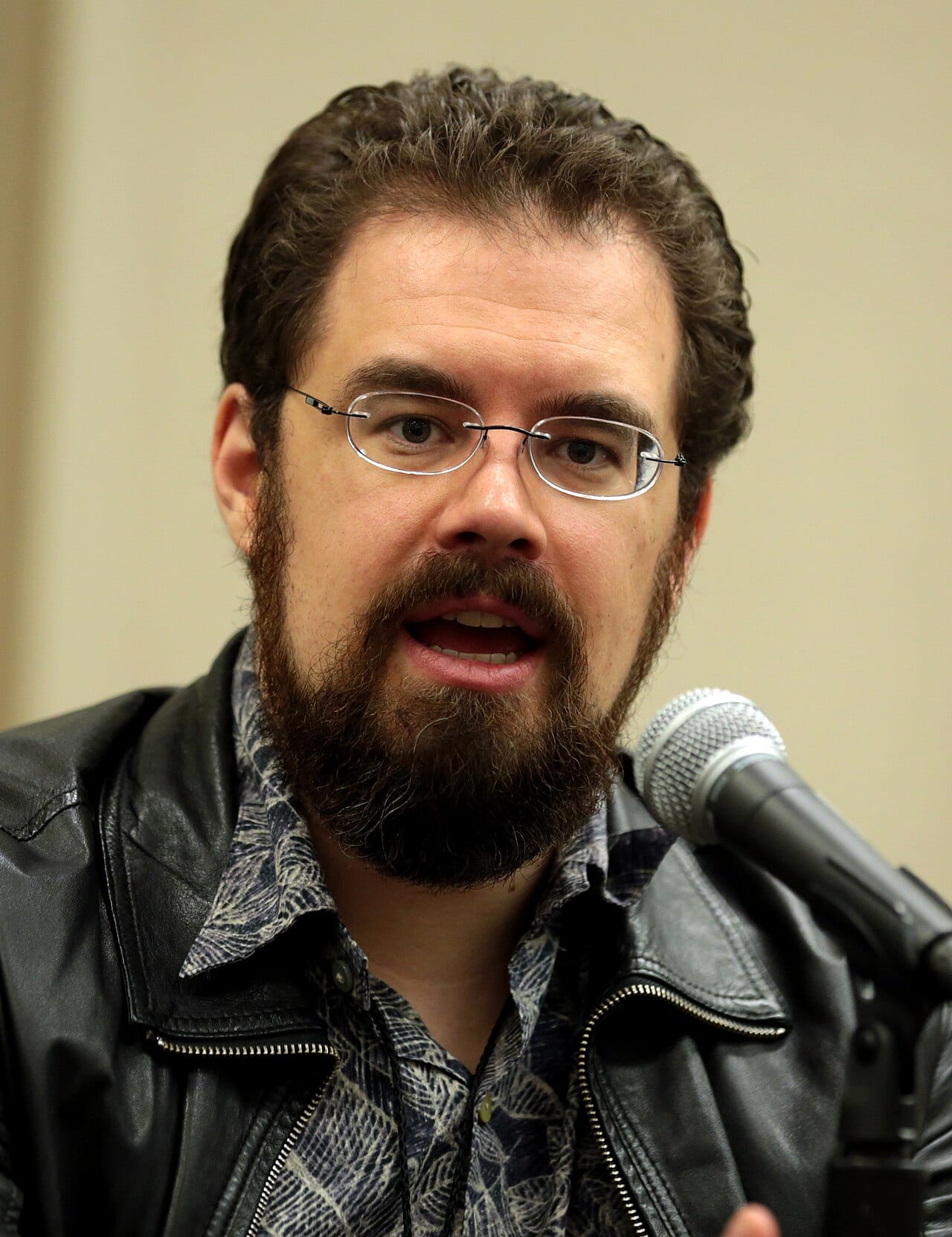
Tor had licensed a stock image for that cover from Shutterstock. The image carried signs of Midjourney's work. Tor used it anyway. "We were not aware that the image may have been created by AI," the publisher said that December, and it moved ahead because of "production constraints"2.
Bramble, Tor's romance imprint, hit the same wall in January 2024. A BookTok reviewer named emmaskies found two Adobe Stock photos tagged "Generative AI" on the cover of "Gothikana"2.
Illustrator Trung Le Nguyen, who publishes his own graphic novels through Random House, answered in public. "I might not be able to judge a book by its cover, but I sure as hell will judge its publisher," he wrote2.
The pattern spread past Tor. Bloomsbury hit a version of the same trouble in 2023.
Its UK design team credited an Adobe Stock wolf. The team later called itself "unaware" the image carried an AI tag2. Penguin Random House denied a similar accusation in 2025, after fans flagged artwork in a George R.R. Martin illustrated edition3.
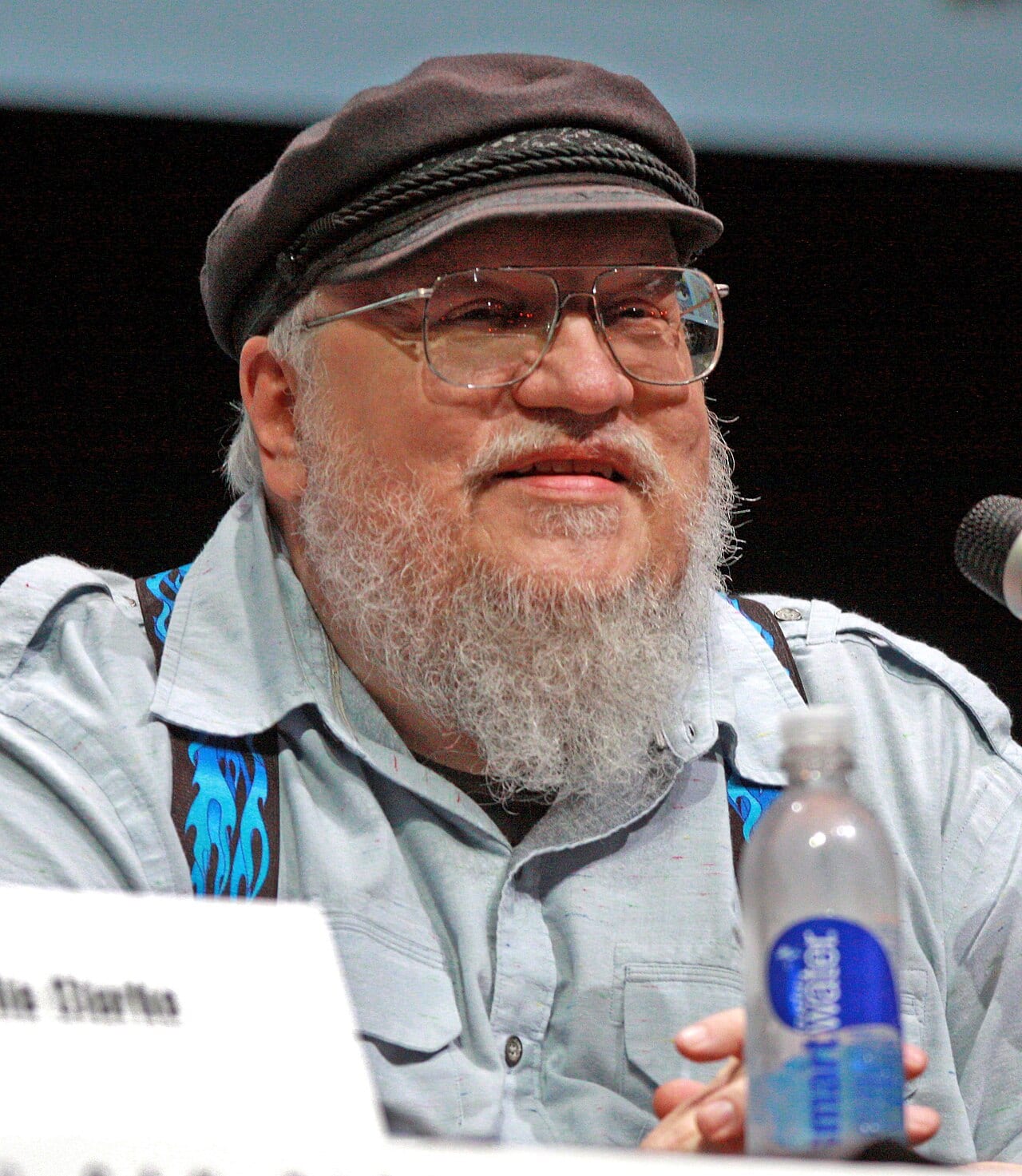
Martin still named the pattern he sees. "In some ways, as challenging as it is for authors, I think the most immediate crisis will be for actors and artists. I mean, the artists are already getting it with AI [book] covers," he told WinterIsComing.net3.
Book Covers Draw AI Accusations Five Times Since 2022
Dated AI-art accusations and confirmations on book covers at three publishers, November 2022 to November 2026
Each pin marks one cover a reader or an artist flagged for likely AI use; the note under a pin says how the publisher answered.
Four of the five cases ended with a publisher confirming or accepting that AI made the art; the fifth, in 2025, ended with a denial.
Sources: ILONA ANDREWS [1]; Publishers Weekly [2]; The A.V. Club [3]. Chart by Ryan Elliott Dennis.
The numbers behind this chart
| Date | Event |
|---|---|
| Nov. 2022 | Fractal Noise. Tor used a Shutterstock image later tied to Midjourney |
| May 2023 | House of Earth and Blood. Bloomsbury credited an AI-flagged Adobe Stock wolf |
| Jan. 2024 | Gothikana. Tor's Bramble imprint used two AI-tagged Adobe Stock photos |
| Nov. 2025 | A Feast for Crows. Publisher denied AI use after fans flagged the art |
| Nov. 20, 2026 | Ilona Andrews's new novel. Tor confirmed AI and pulled the cover |
What the Five Biggest Publishers Promise
Readers want to know which publisher bans the practice in writing. The answer changes from house to house.
Hachette put its answer in a public FAQ. The company backs AI for "operational" work. It draws a line at "creative" uses, including art "that harnesses that technology to replace the creative work of a human author, designer, illustrator, or translator," and promises consent from rights holders first4.
Penguin Random House's copyright pages, updated in 2024, declare every page off-limits to AI training. The Authors Guild praised the step and pushed the company to add the same consent rule for cover art5.
Macmillan's Tor backs its promise with the clause tested this month. "Beyond our existing policies and contractual provisions forbidding this kind of AI use, we will be bolstering our internal review processes," the publisher wrote1.
Macmillan, Hachette and Penguin Random House now put that promise in writing. They are three of the five biggest U.S. trade publishers. HarperCollins and Simon & Schuster keep the same promise unwritten.
Staff at both houses told reporters that chatbots already draft cover art, back-cover copy and agent pitches. Authors at both houses can only guess which covers used them6.
3 of the 5 Biggest Publishers Ban AI Covers in Writing
Which of the five biggest U.S. trade publishers have a written rule against AI-made cover art, as of Nov. 2026
Each cube is one of the five biggest U.S. trade publishers; the magenta cubes have put a rule against AI cover art in writing, and the gray cubes have skipped a comparable public promise.
A written rule here means a contract clause, a public FAQ or a copyright-page statement that names AI-made cover art specifically, apart from a general rule about AI-written text.
Sources: ILONA ANDREWS [1]; Hachette Book Group Author Resources [4]; The Authors Guild [5]; Martin Cid Magazine [6]. Chart by Ryan Elliott Dennis.
The numbers behind this chart
| Item | Value |
|---|---|
| Written rule against AI covers | 3 |
| Policy stays unwritten | 2 |
| Whole | 5 |
Who Loses the Commission
Working artists feel the squeeze most directly. Forty-six percent of illustrators lost a commission to generative AI this year. That's up from 32 percent in 2025, a survey by the UK's Association of Illustrators found7.
More than half of illustrators said their income fell too. Twenty-two percent said it fell by more than half7.
Lisa Sheehan, an illustrator who still takes cover commissions, has watched her own rates slide. "Fifteen years ago, I was commissioning cover art for around £450; I am offered some covers for £350 now, which is just so low after you take off agency fees," she said8.
Some artists want that door left open. Illustrator Tanya Hales argues cheap AI art opens publishing to writers on tight budgets. "I'm a huge advocate of artists getting paid what they deserve. But at the same time, I'm a fan of the idea that there might be a low-cost alternative for those who simply can't afford it," she wrote9.
Her math has a floor under it. A children's book illustrator earns roughly $10,000 a book in traditional publishing, data from Reedsy shows. The $10,000 figure sits past reach for most self-published authors9.
What to do
A creative professional who ships cover art should put a clause against AI art in writing. Ilona Andrews's team already had one before this incident. Ask for the source files behind any licensed stock image before approving a design1.
Check a stock photo's own listing before anyone signs off. Adobe Stock already tags some images "Generative AI" in the title, the exact tag that caught Gothikana's cover2.
Ask your publisher which recent covers used a chatbot or an image generator. Three publishers now answer that in writing. Two stay quiet456.
By the numbers
- Three: AI-made covers tied to Tor since 2022, each caught first by a reader or an outside artist12.
- 46 percent: illustrators who lost a commission to generative AI in 2026, up from 32 percent in 20257.
- Half or worse: the income drop for 22 percent of illustrators this year7.
- £100: cover-art fees fell this much over fifteen years, per illustrator Lisa Sheehan, from £450 to £3508.
- $10,000: the average fee a children's book illustrator earns per book in traditional publishing, per Reedsy9.
- Two of five: the biggest U.S. trade publishers, HarperCollins and Simon & Schuster, keep their AI cover-art rule unwritten6.
What to watch
Tor still owes readers a new, human-made cover for "This Crown Will Not Rule Me," its next novel. Watch whether the credit line names an illustrator this time, something the pulled version left out.
The Authors Guild wants every publisher to require consent before AI art reaches any cover, Penguin Random House included5. Watch which of the other four biggest houses puts that promise in writing next.
Sources
- Ilona Andrews, "Generative AI on This Crown's Cover," ILONA ANDREWS, Nov. 20, 2026, https://ilona-andrews.com/blog/generative-ai-on-this-crowns-cover/
- Sophia Stewart, "Tor Books Criticized for Use of AI-Generated Art in 'Gothikana' Cover Design," Publishers Weekly, Feb. 21, 2024, https://www.publishersweekly.com/pw/by-topic/industry-news/publisher-news/article/94388-tor-books-imprint-bramble-criticized-for-use-of-ai-generated-art-in-gothikana-cover-design.html
- Mary Kate Carr, "Penguin Random House denies making AI art for Game Of Thrones book," The A.V. Club, Nov. 12, 2025, https://www.avclub.com/game-of-thrones-publisher-denies-ai-art-illustrations
- Hachette Book Group, "AI Technology And HBG: Guidance For HBG Authors," Hachette Book Group Author Resources, March 20, 2025, https://www.hbgauthorresources.com/landing-page/info-for-authors-home/info-for-authors-author-ai-faq/
- The Authors Guild, "Authors Guild Encouraged by Penguin Random House's New AI Restrictions," The Authors Guild, Oct. 23, 2024, https://authorsguild.org/news/ag-encouraged-by-penguin-random-house-ai-restrictions/
- Adrian Kessler, "HarperCollins, Hachette and Simon & Schuster quietly hand book copy to chatbots," Martin Cid Magazine, Oct. 10, 2026, https://www.martincid.com/technology-sv/harpercollins-hachette-simon-schuster-ai-book-copy/
- Carlo Carrenho, "Around the Book World: Monday, November 2, 2026," Publishing Perspectives, Nov. 2, 2026, https://publishingperspectives.com/2026/11/around-the-book-world-monday-november-2-2026/
- Tom May, "AI and the future of commercial illustration: what the industry really thinks," Creative Boom, Dec. 4, 2025, https://www.creativeboom.com/insight/is-illustration-dead-creatives-weigh-in-on-ai-and-the-future-of-commercial-art/
- Chelle Honiker, "AI Art Boosts Indie Authors: Insights from Artist Tanya Hales," Indie Author Magazine, April 1, 2023, https://indieauthormagazine.com/using-ai-art-to-level-up-your-author-career-an-artists-perspective/