New computer science majors are growing scarce. The signal came from the National Student Clearinghouse Research Center, or NSC, on Oct. 29. Four-year enrollment in the major fell 12.4 percent this fall, the sharpest drop of any major it tracks1. Graduate programs in the field fell 10.4 percent the same term.
Stanford economist Jacob Light found the same reversal from a different angle. He built a dataset covering 1,019 colleges and 50 million course sections dating back to 19964. Inside it, computer science's share of enrollment fell for the first time in roughly twenty years.
The Computing Research Association, or CRA, backs that up in its own June survey. New computer science majors dropped 13 percent, even as the field handed out a record number of bachelor's degrees2.
Sahil Khanna@IntellectualinsUndergraduate enrollment in Computer and Information Sciences at U.S. four-year institutions fell 8.1% in fall 2025, dropping from roughly 659,700 to 606,100 students.
Graduate enrollment in the field declined even more sharply—14%.
The timing overlaps with the rapid adoption… pic.twitter.com/CIb1ykmuuA

New majors shrink while degrees hit a record
CRA runs the Taulbee Survey, the field's own yearly count. Its June report tracked schools that answered every year since 20202. New computer science majors fell to 33,490 there, down 13 percent. Total enrollment fell to 169,528, down 4 percent.
Plain head counts from the NSC tell the same story. Four-year computer science enrollment stood near 659,700 in the fall of 20244. It slipped to 606,100 by fall 2025. This fall's 12.4 percent drop points toward roughly 531,000 now1.
Degree counts moved the other way. Bachelor's degrees in computer science hit a record 41,858, up 13 percent from last year2.
Degrees lag enrollment by a few years, though. A class that enrolled during the 2020s boom is only now graduating. This year's pullback shows up later, at commencement, years behind today's degree count.
Master's programs felt a sharper jolt. Total enrollment there fell about 26 percent, and newly admitted students dropped 10 percent2. Most of that group comes from abroad. CRA counted 63 percent of new master's students arriving from outside North America, so a tighter visa process cuts that pipeline directly.
Four-Year Computer Science Enrollment Falls to About 531,000 This Fall
Undergraduate computer and information science enrollment at U.S. four-year colleges, fall terms 2024 to 2026
Each point is one fall term's enrollment count; the 2026 point is an estimate, drawn lighter, from this year's reported 12.4 percent drop ahead of a final headcount.
The 2026 figure is an estimate from the Clearinghouse's reported percent change, ahead of a published headcount.
Sources: National Student Clearinghouse Research Center [1]; The Next Web [4]. Chart by Ryan Elliott Dennis.
The numbers behind this chart
| Period | Value |
|---|---|
| Fall 2024 | 659,700 |
| Fall 2025 | 606,100 |
| Fall 2026 (estimate) | 530,944 |
CRA ran a springtime preview too, matching schools year to year9. It framed the split across levels plainly. Bachelor's enrollment fell 3.1 percent. Master's enrollment dropped nearly a quarter, 24.9 percent.
Doctoral enrollment slipped 2.2 percent. Distance from graduation predicts the damage: students furthest from finishing took the hardest hit.
Computer Science Master's Enrollment Falls 24.9 Percent
Change in enrollment from 2024 to 2025, by degree level, among CRA Taulbee units matched in both years
Each column is one degree level's enrollment change from the prior year; the master's column falls the farthest, bachelor's and doctoral fall by smaller, closer amounts.
This comparison uses year-over-year matched units; the longitudinal 2020-2025 cohort cited elsewhere in this piece uses a different sample and shows smaller bachelor's and total-enrollment declines.
Source: Computing Research News [9]. Chart by Ryan Elliott Dennis.
The numbers behind this chart
| Item | Value |
|---|---|
| Bachelor's | −3.1% |
| Master's | −24.9% |
| Doctoral | −2.2% |
Where the worry shows up on campus
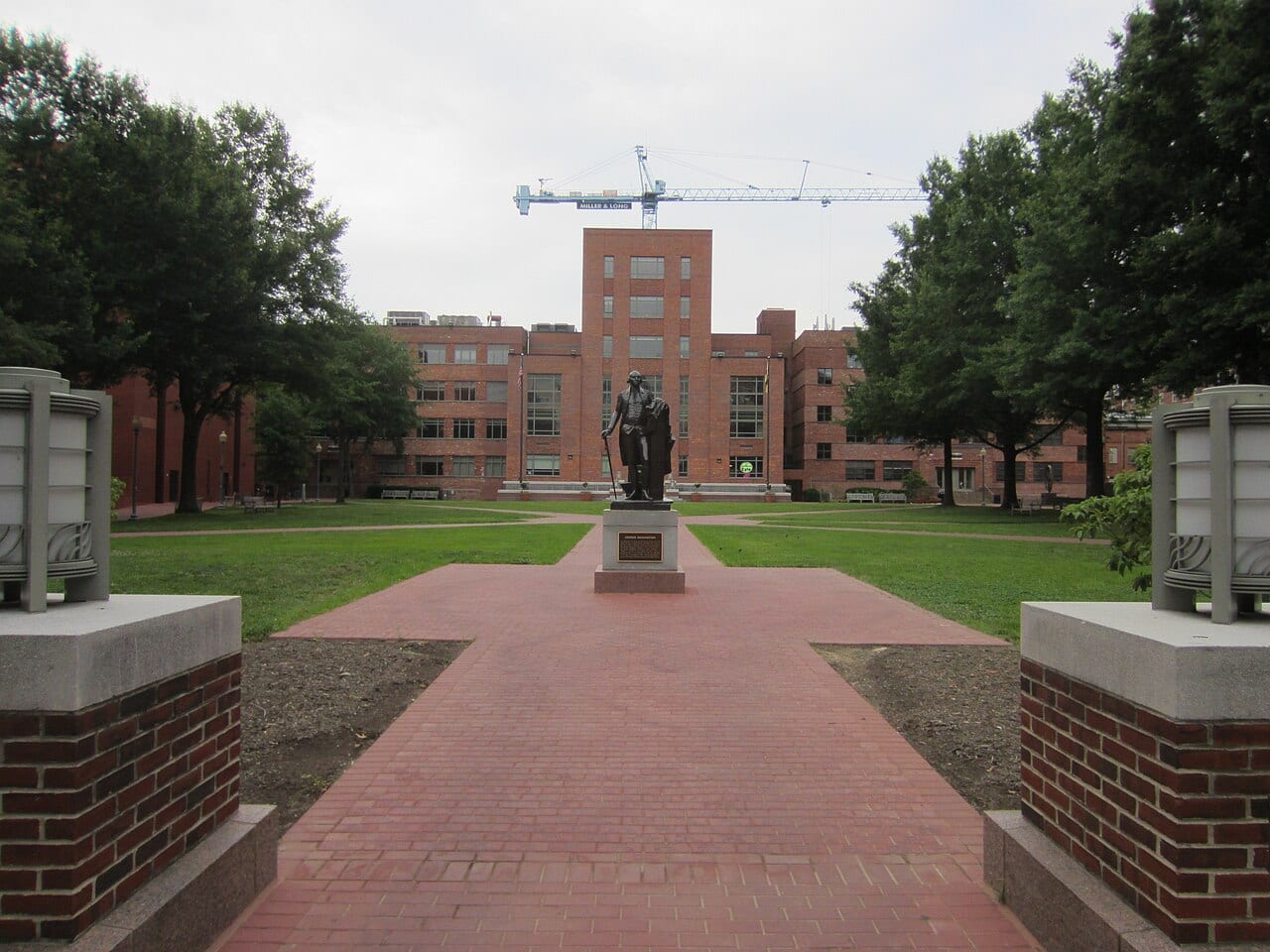
George Washington University offers the clearest local picture. Its computer science majors fell from 311 in 2023 to 205 this year6. Three years, a 34 percent drop. That is the department's lowest count since 2016.
John Lach is dean of GW's engineering school. He told The GW Hatchet the school has "not escaped" the national pullback6. Still, he added a caution any dean would share: "Specific to computer science, no one knows exactly how artificial intelligence will impact the future," Lach said. "What we do know is that computer science professionals will be needed more with AI, not less."
Faculty are rewriting classes. The fix reaches the curriculum itself. Timothy Wood, an associate professor at GW, cut lab sections and graduate electives to match the smaller class6. He said the department now works "to understand the capabilities and weaknesses of AI models."
His colleague Sibin Mohan put the sales pitch plainly: "Sure you can use AI as a tool that can enable you, make your life better and faster, but you still need to have a good understanding of the field that you're in to use that well," Mohan said.
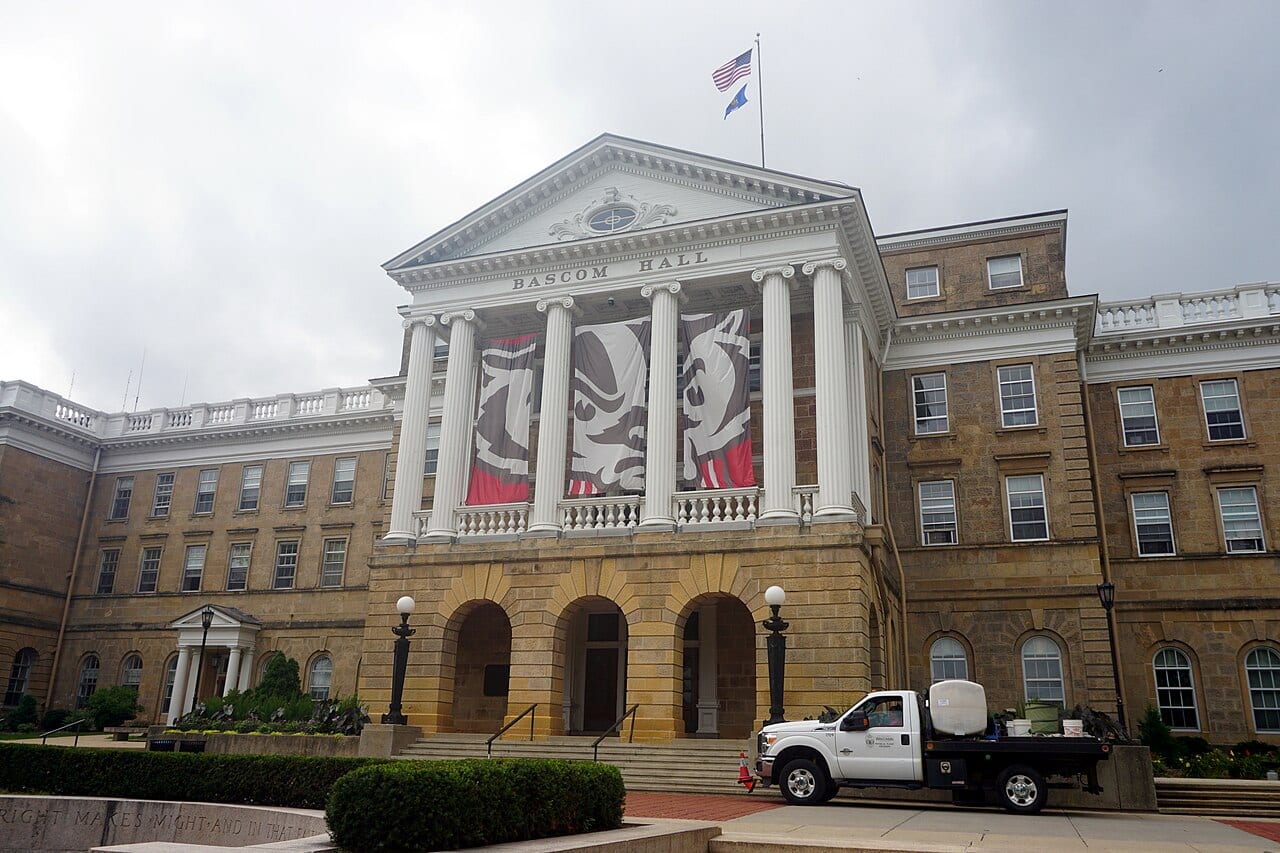
Students feel the same tension GW's faculty describe. Ethan Manuel is a freshman computer science major at the University of Wisconsin-Madison. He told The Daily Cardinal he worries about his future "every day"7.
"All the coding that I'm learning in my classes is just to learn the fundamentals of coding," Manuel said7. "Eventually if I have coding in my job, it's just looking at what the AI does — it will be using agents to monitor agents." Manuel still plans to finish his degree. He believes the fundamentals will outlast any single tool.
A wider survey backs up what Manuel describes. CRA's research arm polled 134 leaders last fall3. 62 percent reported falling enrollment in their programs. Software engineering took the sharpest hit, at 60 percent.
Cybersecurity, data science and AI majors grew at a similar share of schools, meanwhile. Two in three leaders also said new graduates were struggling to land a job.
Four rivals compete with the AI story
Light's own numbers carry a warning label. At the typical school in his sample, computer science course enrollment fell 4.6 percent a year4. He stops short of calling that a verdict rather than a trend. "I treat the enrollment patterns as descriptive evidence rather than as an estimate of the causal effect of ChatGPT or AI exposure on student demand," Light wrote5.
His paper names four rivals to the AI explanation. One is a cooler market for junior developers. Another is doubt about what a computer science degree now buys.
Weaker math preparation among incoming students counts as a third. Demographic shifts tied to visa rules round out the four5.
CRA points to a fifth. Its May report ties much of the graduate decline to a 17 percent national drop in new foreign enrollment. The Institute of International Education reported that drop on its own9.
Career counselors push back. Jessica Roffe runs the coaching firm Career Beginnings. She understands why students grow "very hesitant about certain majors" right now, given a computer science unemployment rate that climbed to 7 percent in 20248.
Still, she argues the skill keeps its value outside the famous tech employers. "Every type of industry needs computer science students, not just the big tech companies, so if you can pivot and be a computer scientist at a bank or a hospital, you can still be really valuable," Roffe said.
Scale matters here. The boom these numbers interrupt was enormous. Computer science bachelor's degrees roughly doubled in a decade4. They went from about 56,000 in 2014 to 122,000 in 2024.
A pullback measured in single digits looks different against a base that size than against a flat one.
What to do
Recruiters and hiring managers should drop the old assumption. The junior pipeline now runs years behind its old schedule. This year's smaller intake of new majors reaches the job market in three to five years. That is right as today's record graduating classes finish clearing it.
Track where the growth actually sits today. Cybersecurity, data science and applied AI programs are gaining students at the same schools where plain computer science is losing them. A role described as cybersecurity or applied AI will draw a deeper pool than one labeled only software engineer.
By the numbers
- Four-year computer science enrollment fell 12.4 percent this autumn, the sharpest drop the NSC tracks1.
- New computer science majors dropped to 33,490 in CRA's 2025 count, down 13 percent from the year before2.
- Stanford economist Jacob Light built his dataset from 1,019 colleges and 50 million course sections dating to 19964.
- Master's enrollment fell about 26 percent, tied partly to a drop in foreign admissions2.
- Sixty-two percent of computing department leaders reported lower enrollment in a CRA survey of 134 leaders3.
- Career coach Jessica Roffe cites a computer science graduate unemployment rate of 7 percent in 2024 as a reason for student hesitation8.
What to watch
Watch next fall's Taulbee count. It settles the direction. Three straight years of decline would make the pullback structural rather than a single scare. A steadier intake, once this year's hiring freeze thaws, would shift the blame toward Light's other four suspects.
Cybersecurity, data science and applied AI deserve a watch too. Those fields are absorbing some of what plain computer science sheds. That split tells recruiters where the next graduating class will actually specialize.
Sources
- National Student Clearinghouse Research Center, "Clearinghouse Enrollment Insights Series: Preliminary Fall Enrollment Trends," National Student Clearinghouse Research Center, Oct. 29, 2026, https://nscresearchcenter.org/prelim-fall-enrollment-trends/
- Jasmine Batten, "CRA Update: New CRA Taulbee Survey Findings Show Record Degree Production Alongside a Cooling Enrollment Pipeline," Computing Research News, June 2026, https://cra.org/crn/2026/06/cra-update-new-cra-taulbee-survey-findings-show-record-degree-production-alongside-a-cooling-enrollment-pipeline/
- Kari George, "CERP Pulse Survey: A Snapshot of 2025 Undergraduate Computing Enrollment Patterns," Computing Research News, October 2025, https://cra.org/crn/2025/10/cerp-pulse-survey-a-snapshot-of-2025-undergraduate-computing-enrollment-patterns/
- Alina Maria Stan, "US computer-science enrolment just fell for the first time in 20 years," The Next Web, July 22, 2026, https://thenextweb.com/news/computer-science-enrollment-falls-ai-first-time
- Frank Landymore, "Computer Science Enrollment Now Declining Under Dark Cloud of AI," Futurism, July 24, 2026, https://futurism.com/artificial-intelligence/computer-science-decline-ai
- Chris Poisson and David Demakos, "Computer science department revamps curriculum to combat falling enrollment in the age of AI," The GW Hatchet, Nov. 9, 2026, https://gwhatchet.com/2026/11/09/computer-science-department-revamps-curriculum-to-combat-falling-enrollment-in-the-age-of-ai/
- Erin Bickford, "Change your major or stay the course? College students navigate a world evolving due to AI," The Daily Cardinal, Nov. 19, 2026, https://www.dailycardinal.com/article/2026/11/change-your-major-or-stay-the-course-college-students-navigate-a-world-evolving-due-to-ai
- Sophie Caldwell, "Students are reconsidering their majors, career paths and industries due to AI: CNBC survey," CNBC, Sept. 1, 2026, https://www.cnbc.com/2026/09/01/students-are-reconsidering-majors-career-paths-due-to-ai-cnbc-survey.html
- Jasmine Batten, "CRA Update: A Sneak Peek at Computing Degree Enrollment Trends from the 2025 CRA Taulbee Survey," Computing Research News, May 2026, https://cra.org/crn/2026/05/cra-update-a-sneak-peek-at-computing-degree-enrollment-trends-from-the-2025-cra-taulbee-survey/