
The 10-year Treasury yield closed at 5.29% on Sept. 30, 2026, Treasury's own data show2. That was its highest close since 2007, CNBC reported the same week3. Someone had to explain the jump.
A year earlier, the yield was still falling. It closed 2024 at 4.33%, then slid to 3.94% by the end of 20252. By June it stood at 4.38%. Three months later it hit 5.29%.
ING tried to answer why. The Dutch bank's rates team put a number on AI's share of the blame. About one-fifth1. Most of that fifth, they found, is optimism about future profits, apart from the borrowing itself.
The 10-Year Treasury Yield Climbs to 5.29%, Its Highest Since 2007
10-year Treasury par yield, daily close, January 2024 to November 2026
The line is the 10-year Treasury yield at each date. It fell through 2025, then climbed through 2026 as AI-linked bond sales and inflation worries built, before easing back toward the end of November.
Sources: U.S. Department of the Treasury [2]; CNBC [3]. Chart by Ryan Elliott Dennis.
The numbers behind this chart
| Period | Value |
|---|---|
| Jan. 2024 | 4.33% |
| Dec. 2025 | 3.94% |
| June 2026 | 4.38% |
| Sept. 2026 | 5.29% |
| Nov. 2026 | 4.74% |
ING's Math
Long-dated yields are interest rates on debt that matures ten years or more from now. They set the price of a 30-year mortgage and a hyperscaler's bond alike.
Three ING strategists built the estimate: Padhraic Garvey, Jan Frederik Slijkerman and Timothy Rahill1. Garvey leads the bank's research for the Americas. He put the split plainly: "Probably 20% of the total influence. And of that, 70% reflects productivity and 25% is AI issuance," he said.
Garvey's team builds its case on three pillars. AI now drives about a third of U.S. economic growth, by its reading of GDP data1. Companies have sold $878 billion in corporate bonds this year, with technology, media and telecom debt nearly tripling to $330 billion. Investors expect AI's productivity gains to lift growth and rates together, Garvey's team argues, with proof arriving years later.
The split is a judgment call, Garvey's team says, "overlaid with a large dollop of subjectivity" despite the numbers behind it1. Inflation and the federal deficit still outrank AI in ING's own model, at 50% and 30% of the total.
Who Is Borrowing, and Why
Five companies drive most of the borrowing: Alphabet, Amazon, Meta, Microsoft and Oracle. They pay bondholders well for every dollar of risk taken on.
Reuters counted $121 billion in their combined bonds for 20257. A Bank of Korea study found the same five companies sold $230 billion in the first nine months of 20268. The nine-month total was more than double their prior year's pace.
That nine-month total equals 33% of all U.S. government bond issuance of two years or more over the same stretch. Bank of Korea researchers found it8. The five companies' share of outstanding investment-grade corporate debt rose from 2% to 4.8% in a year.
Five Hyperscalers Borrow $230 Billion in Bonds Before September Ends
Combined bond sales by Alphabet, Amazon, Meta, Microsoft and Oracle, full-year 2025 against the first nine months of 2026
Each column is the five companies' combined bond sales for the period named below it. The 2026 column spans nine months against a full year for 2025, so its lead over 2025 understates the full-year gap.
The 2025 column covers twelve months and the 2026 column covers nine, so a full 2026 year would likely widen the gap further.
Sources: Reuters [7]; The Herald Business [8]. Chart by Ryan Elliott Dennis.
The numbers behind this chart
| Item | Value |
|---|---|
| 2025 (full year) | $121B |
| 2026 (Jan.-Sept.) | $230B |
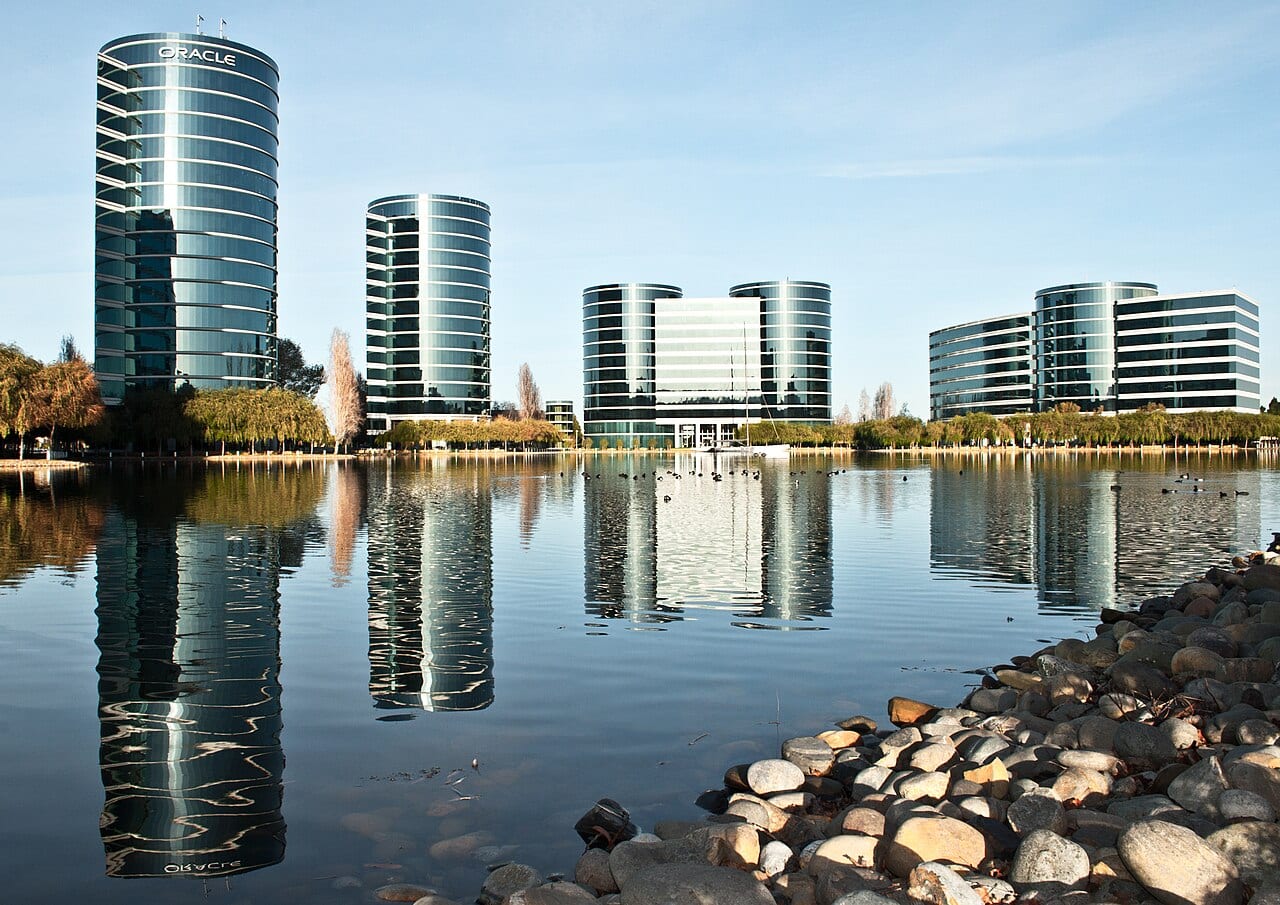
Oracle alone sold $18 billion of bonds in September 2025 to help fund its AI data centers7. Others followed fast. Alphabet and Amazon priced deals of their own before the year closed. Meta priced the largest standalone high-grade sale on record.
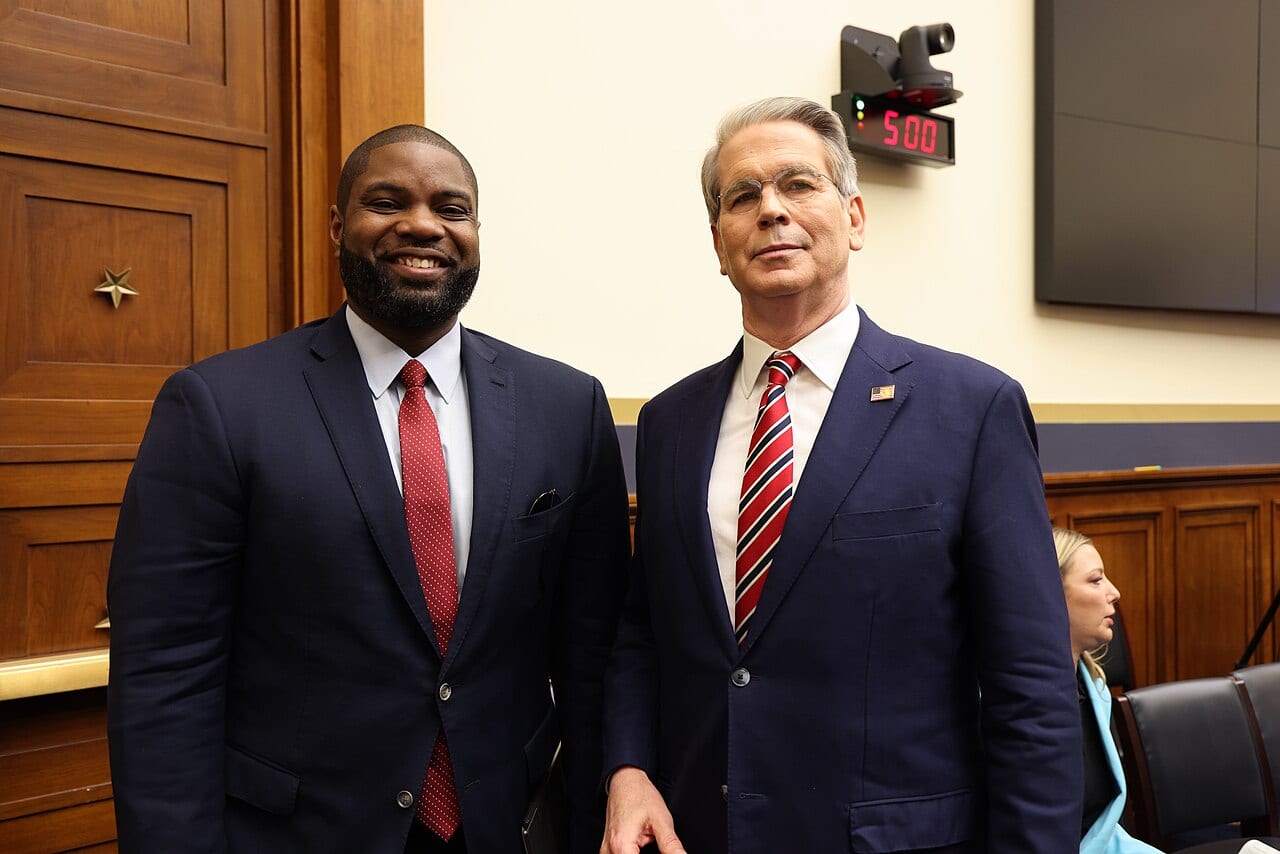
Treasury Secretary Scott Bessent has watched the pattern up close. He told CNBC in August that AI issuers barely notice what their own debt costs: "a lot of that corporate issuance, I would say, is almost yield-agnostic, because the build-out for A.I., the returns on that, the companies believe they're going to be so high. They don't really care what they're paying," he said5.
Fidelity's Jurrien Timmer watched too. He saw the same pattern from a trading desk. In August he posted a chart on X, showing hyperscaler bond sales outrunning the companies' own stock issuance. The pattern, he said, had reached an unusual audience.
Jurrien Timmer@TimmerFidelityBased on what I am hearing from within our walls, the jaws below are likely to get considerably wider as the hyperscalers continue to tap the bond market while also raising equity. The reverse crowding out in the corporate bond market has even gotten the Treasury Secretary’s… pic.twitter.com/oKN0PHHRBc

The Case Against AI as the Culprit
Robin Brooks reads the selloff differently. The Brookings Institution fellow calls September's jump a natural experiment4.
If AI debt were crowding out Treasuries, long-run growth expectations should have slipped too, Brooks argues. They held steady instead, which he says points elsewhere: "On one end of the spectrum are people like me who think this is a rising fiscal risk premium as our public debt grows out of control," he wrote4.
The federal deficit reached $1.99 trillion in fiscal 2026, 12% worse than the year before, Fortune reported4. National debt stands at $40 trillion. Net interest payments hit $1.05 trillion, up 8%, and now equal 3.2% of GDP, the highest share since 1991.
Maya MacGuineas, president of the Committee for a Responsible Federal Budget, sees the same math turning on itself. "Higher interest begets more debt, and greater debt begets higher rates and higher interest. Eventually, the whole thing could come crashing down," she wrote6.
ING's own estimate leaves room for both readings. Garvey's team puts the deficit and sticky inflation ahead of AI as drivers of the climb1. It still credits AI with its own fifth.
What to Do
AI's share is real. It stays small next to the deficit. Budget for a higher cost of capital this year. Skip betting that AI alone will fix or break that cost next year.
Track the 25% issuance share more closely than the 70% productivity story, since issuance shows up every quarter in bond filings. Productivity is a belief the market prices years ahead of the proof.
By the Numbers
- 20%: ING's estimate of AI's share of the rise in long-dated Treasury yields this year1.
- 5.29%: the 10-year Treasury yield's close on Sept. 30, 2026, its highest since 20072.
- $230 billion: bonds sold by five hyperscalers in the first nine months of 20268.
- Treasury's own data put the 10-year yield at 4.74% on Nov. 25, 2026, after the climb eased2.
- $1.99 trillion: Washington's federal budget deficit this fiscal year4.
- $121 billion: five hyperscalers' combined bond sales for 2025, before this year's surge7.
- 33%: hyperscalers' nine-month bond total as a share of long-dated government issuance8.
- Net interest on federal debt reached 3.2% of GDP this year, its highest share since 19914.
What to Watch
Track the next inflation report before the next AI earnings call. Prices matter most.
Garvey's own model backs that reading: inflation and the deficit still carry more weight than AI does. A yield that falls on a cool reading, even as bond sales climb, would back Brooks over ING's issuance story. Climbing yields on heavy bond calendars alone, with prices calm, would back the opposite.
Sources
- Padhraic Garvey, Jan Frederik Slijkerman and Timothy Rahill, "To what extent is the rise in long-dated rates attributable to AI?" ING, Oct. 1, 2026, https://think.ing.com/articles/to-what-extent-is-the-rise-in-long-dated-rates-attributable-to-ai
- U.S. Department of the Treasury, "Daily Treasury Par Yield Curve Rates," accessed Nov. 25, 2026, https://home.treasury.gov/resource-center/data-chart-center/interest-rates/TextView?type=daily_treasury_yield_curve
- Deena Zaidi, "The 10-year Treasury yield is at its highest in 19 years. How we got here," CNBC, Sept. 26, 2026, https://www.cnbc.com/2026/09/26/10-year-treasury-yield-is-at-its-highest-in-19-years-how-we-got-here.html
- Jason Ma, "The market bloodbath just exposed Wall Street's true fears about U.S. debt, top economist warns," Fortune, Nov. 8, 2026, https://fortune.com/2026/11/08/us-debt-ai-stock-market-selloff-bond-yields-treasury-risk-premium/
- CNBC, "CNBC Exclusive: Transcript: U.S. Treasury Secretary Scott Bessent Speaks with CNBC's Sara Eisen on 'Squawk on the Street' Today," Aug. 20, 2026, https://www.cnbc.com/amp/2026/08/20/cnbc-exclusive-transcript-us-treasury-secretary-scott-bessent-speaks-with-cnbcs-sara-eisen-on-squawk-on-the-street-today.html
- Committee for a Responsible Federal Budget, "Washington Needs a Fiscal Intervention," Sept. 29, 2026, https://www.crfb.org/press-releases/washington-needs-fiscal-intervention
- Matt Tracy, "AI hyperscalers will drive higher US corporate bond supply in 2026, analysts say," Reuters, Jan. 15, 2026, https://finance.yahoo.com/news/ai-hyperscalers-drive-higher-us-225314460.html
- Kim Byeo-ree, "Corporate bond issuance by data center 'Big 5' doubles from last year as AI overinvestment fears grow," The Herald Business, Oct. 27, 2026, https://biz.heraldcorp.com/article/10916568
- Andre Joaquim, "US 10-Year Yield Eases from 5%," Trading Economics, Sept. 14, 2026, https://tradingeconomics.com/united-states/government-bond-yield/news/583604
- Jurrien Timmer, post on X, Aug. 26, 2026, https://x.com/TimmerFidelity/status/2092749682615480525