
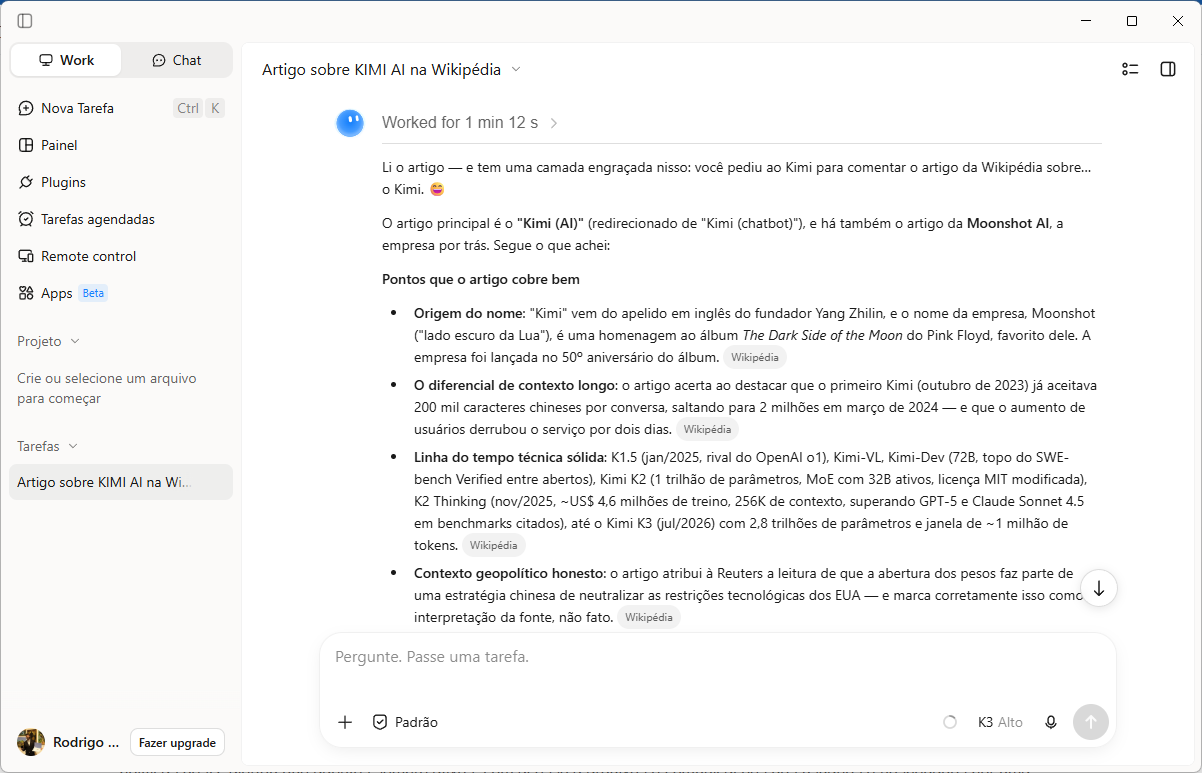
Moonshot AI shipped Kimi K3.1 Pro on Friday1. Hours later, Artificial Analysis placed it fourth among 215 models on its Intelligence Index, at 55 points3. A lab in Beijing had put an open-weight model past OpenAI's newest release and one of Anthropic's at once. Every open model before it had missed that spot6.
Within hours, Moonshot's own post on X passed 17,000 likes2. Hacker News sent the story to its front page, where it drew 491 points7. The excitement outran anyone's chance to check the numbers.
The climb, corrected
Friday's loudest post got the comparison wrong. One widely shared account called the new model's showing on par with, or better than, two paid rivals it named directly12. Artificial Analysis's own board tells a sharper story.
Artificial Analysis built that index to roll reasoning, coding and knowledge tests into one score3. A buyer can rank models in one glance, instead of ten separate charts.
Three rivals still sit above the new arrival on that board. Claude Opus 5.5 leads at 58 points3. One step below it, Claude Sonnet 5.5 and Meta's Muse Wonder Full tie at 56 apiece4.
Two rivals sit below it instead, scoring 53 apiece. GPT-6 Astra and Claude Fable 5.1 hold those spots910.
Kimi K3.1 Pro's 55 Points Clear GPT-6 Astra's 53
Artificial Analysis Intelligence Index score, six frontier models, higher is better, Oct. 23, 2026
Each column is one model's Intelligence Index score; a higher column is a stronger result, magenta marks Kimi K3.1 Pro, and gray marks the five rivals it now sits among.
Sources: Artificial Analysis [3]; Artificial Analysis [4]; Artificial Analysis [9]; Artificial Analysis [10]. Chart by Kelly Dennis.
The numbers behind this chart
| Item | Value |
|---|---|
| Claude Opus 5.5 | 58 |
| Claude Sonnet 5.5 | 56 |
| Muse Wonder Full | 56 |
| Kimi K3.1 Pro | 55 |
| Claude Fable 5.1 | 53 |
| GPT-6 Astra | 53 |
So the viral framing undersold the real move. It beat both of the named rivals outright, by the same index Artificial Analysis runs on every model alike3.
A score Moonshot alone has run
Magnus Corvin read the same table and reached for caution instead. Terminal-Bench grades how well a model finishes real coding tasks inside a command line. The scaffolding around it is the software that hands the model each step. That software changes the score.
Writing at OrcaRouter the day of the launch, Corvin picked apart Moonshot's own Terminal-Bench numbers. K3.1 Pro scored 65.7 percent, against GPT-6 Astra's 58.2 percent, both measured by Moonshot itself51.
"The harness problem is not hypothetical: Terminal-Bench scores swing by tens of points depending on scaffolding, which is why a 65.7% and a 58.2% produced in different labs are not a measurement of a 7.5-point gap," Magnus Corvin wrote5. His conclusion was blunt. "What it has not done is submit the result to an independent harness," he added.
Artificial Analysis's own numbers raise a second question. The model generated 55,000 output tokens per Intelligence Index task, 14 percent more than its predecessor's 48,0004. A model that writes more also gets more chances to land the right answer.
The case the score still makes
Simon Willison took the opposite approach. He logged into Moonshot's own API and ran the model against his own prompts, rather than reading someone else's chart6. "This is the first time a (soon-to-be) open weight model has scored this highly against the frontier," Simon Willison wrote.
That line still stands beside Corvin's caution, because the two men checked different things. Corvin doubted Moonshot's own Terminal-Bench comparison. Willison pointed at the Intelligence Index, a board Artificial Analysis itself runs and scores on every model alike36.
What Moonshot traded for the open release
The model runs on a design called mixture of experts. It switches on only a slice of its network for each answer. The rest of the system stays idle.
Moonshot AI made one cut before anyone outside the company can touch its future weights. "For the open-weight release of K3.1 Pro, we identified and removed cyber-related data from both training stages, while retaining the general-purpose coding tasks needed for model usefulness," Moonshot AI wrote on its blog1.
Moonshot's Safety Filter Costs Kimi 9.5 Points on a Hacking Test
xdev-bench-hard, pass@3, with and before Moonshot's cyber-data filter, Oct. 23, 2026
The dot is one version of Kimi K3.1 Pro on the same internal test; the blue dot kept cyber-attack data out of training, higher is the easier result to ship, and the gray dot built the model before that cut.
Source: Kimi.ai [1]. Chart by Kelly Dennis.
The numbers behind this chart
| Item | With the safety filter | Before the filter |
|---|---|---|
| xdev-bench-hard, pass@3 | 81% | 90.5% |
The filter carries a price. On Moonshot's own hacking benchmark, xdev-bench-hard, the filtered model scored 81.0 percent. A version Moonshot built before adding the filter scored 90.5 percent on that same test1. Moonshot picked the lower score on purpose, weeks before any outside lab can confirm the trade held.
Who built this, and who is watching
Yang Zhilin founded Moonshot AI in Beijing in March 2023. He brought two schoolmates from Tsinghua University, Zhou Xinyu and Wu Yuxin11. Moonshot gives the Kimi chatbot away for ordinary use. It charges developers who want to run the biggest version through its own servers1.

Three years on, their model sits on a public scoreboard beside products from companies worth many times more than Moonshot.
The crowd that noticed skipped the caution first. A separate account posting as Chubby called the launch stunning, and that post alone passed 1,500 likes within hours12. On Hacker News, 286 comments argued over what one score can prove7. GitHub told the same story in stars: Moonshot's own repository passed 8,968 of them the same day8.
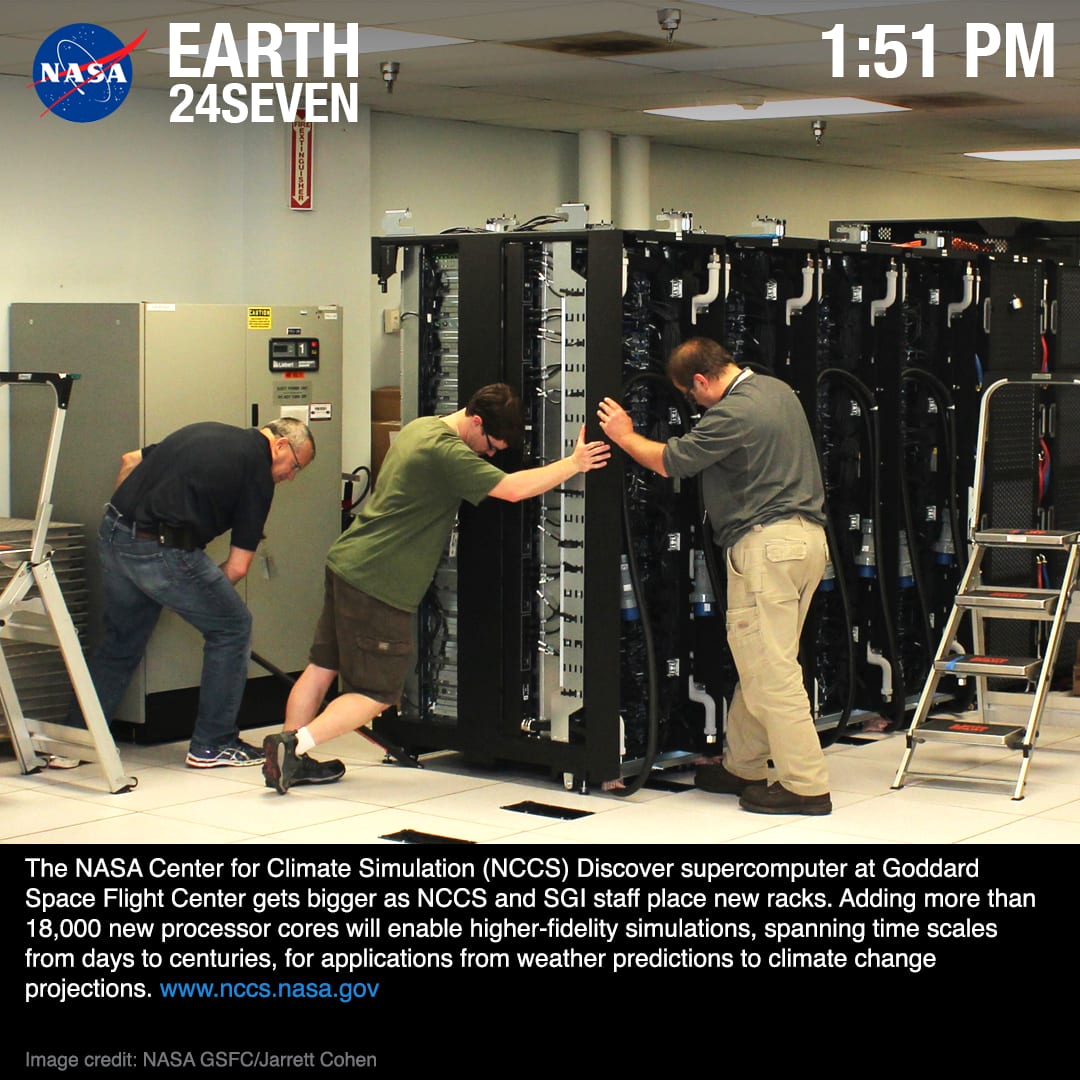
A model of that size runs on hardware built to match it. Moonshot has kept its chip supplier private1.
What to do
Hold judgment on the new model's rank until Nov. 4. Moonshot has promised to publish the model's open weights by that date. Once it does, any lab can run its own test, instead of reading Moonshot's chart or Artificial Analysis's index alone1. Watch for the first outside benchmark run after that date, rather than the first post about the launch.
Teams picking a model for production work can use its hosted price today. That price runs $2 per million input tokens and $10 per million output, with a 1-million-token context window3. It already beats the predecessor's, so the cost case stands on its own before the open-weight date arrives1.
By the numbers
- 55 points: Kimi K3.1 Pro's score on Artificial Analysis's Intelligence Index, fourth among 215 models tracked3.
- GPT-6 Astra sits two points lower, at 53, in eighth place on the same index9.
- Claude Fable 5.1 also scores 53, good for sixth place10.
- 2.8 trillion: Kimi K3.1 Pro's total parameters, with about 104 billion active for each answer1.
- 55,000: the output tokens K3.1 Pro spent per Intelligence Index task, a 14 percent jump over K34.
- 491 points: the Hacker News thread's score hours after launch, with 286 comments7.
- 8,968: GitHub stars on Moonshot's repository the day of launch8.
- Nov. 4: the date Moonshot has promised to release K3.1 Pro's open weights1.
What to watch
Watch whether an outside lab reruns the model's benchmarks once the weights ship on schedule. A matching score would answer Corvin's doubt directly, and a lower one would answer Willison's. Watch Artificial Analysis's board too. A fourth-place finish that survives outside testing would prove Moonshot's open-weight bet paid off, exactly as Friday's crowd assumed.
Sources
- Moonshot AI, "Kimi K3.1 Pro," Kimi.ai, Oct. 23, 2026, https://www.kimi.ai/blog/kimi-k3-1-pro
- Kimi.ai, "Introducing Kimi K3.1 Pro," X, Oct. 23, 2026, https://x.com/Kimi_Moonshot/status/2113680701770068067
- Artificial Analysis, "Kimi K3.1 Pro," Artificial Analysis, Oct. 23, 2026, https://artificialanalysis.ai/models/kimi-k3-1-pro
- Artificial Analysis, "Kimi K3.1 Pro launches at 4th on the Intelligence Index and will lead open weights models," Artificial Analysis, Oct. 23, 2026, https://artificialanalysis.ai/articles/kimi-k3-1-pro-launch-benchmarks
- Magnus Corvin, "Kimi K3.1 Pro vs Kimi K3: What Changed, and What It Costs," OrcaRouter, Oct. 23, 2026, https://www.orcarouter.ai/blog/kimi-k3-1-pro-vs-kimi-k3
- Simon Willison, "Introducing Kimi K3.1 Pro," Simon Willison's Weblog, Oct. 23, 2026, https://simonwillison.net/2026/Oct/23/kimi-k31-pro/
- Jowsey, "Kimi K3.1 Pro and K3.1 Pro Highspeed," Hacker News, Oct. 23, 2026, https://news.ycombinator.com/item?id=50212065
- Moonshot AI, "MoonshotAI/Kimi-K3," GitHub, Oct. 23, 2026, https://github.com/MoonshotAI/Kimi-K3
- Artificial Analysis, "GPT-6 Astra," Artificial Analysis, Oct. 23, 2026, https://artificialanalysis.ai/models/gpt-6-astra
- Artificial Analysis, "Claude Fable 5.1," Artificial Analysis, Oct. 23, 2026, https://artificialanalysis.ai/models/claude-fable-5-1
- Wikipedia contributors, "Moonshot AI," Wikipedia, Oct. 23, 2026, https://en.wikipedia.org/wiki/Moonshot_AI
- Chubby, "Holy shit: Kimi k3.1 pro is on par or even outperforms Opus 5.5," X, Oct. 23, 2026, https://x.com/kimmonismus/status/2113681534792183863