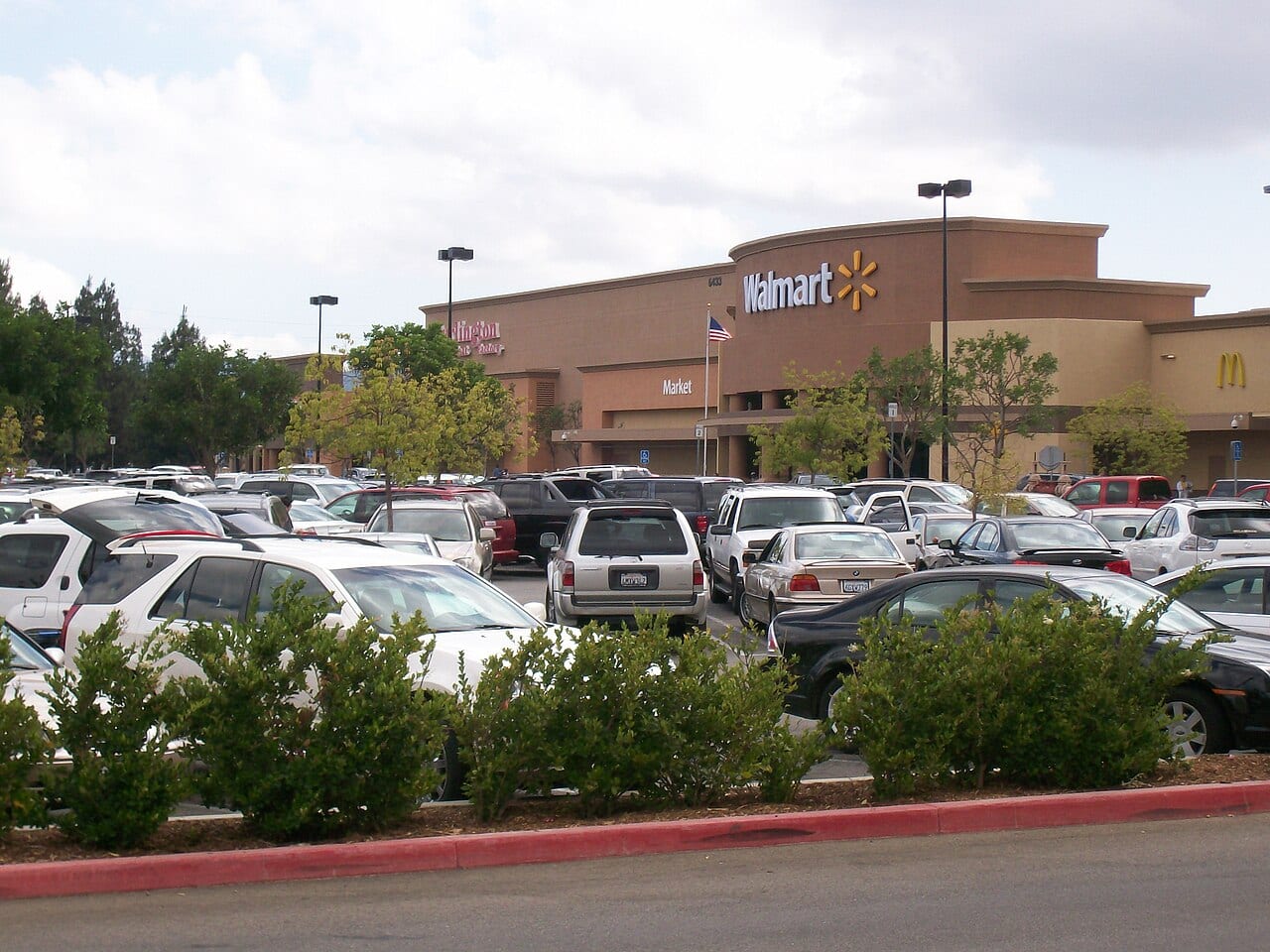
Black Friday lands on Nov. 27 this year. Salesforce expects AI agents to drive a fifth of holiday e-commerce traffic that day1. Each one visits a store and fills a cart on its own. Walmart just opened its site to let them finish the sale2.
Amazon keeps fighting the same kind of agent in court3. eBay bans most of them from checkout by default4. Target lets them in, but the shopper pays for what the bot gets wrong5.
What Salesforce Is Betting On
Salesforce built its forecast from its own retail software1. The company tracks more than 1.5 billion shoppers through its Commerce, Marketing and Service Cloud products. Those billions of transactions give Salesforce a real count of how often an AI tool touches a sale.
Caila Schwartz, Salesforce's director of consumer strategy and insights, has the numbers behind that forecast1. Half of shoppers already used an AI assistant somewhere in a purchase this year, a jump of 67 percent from last year. One in three online stores will run a shopping agent of their own by Cyber Week, the week after Black Friday.
Treat the 20 percent figure as a forecast. Salesforce sells the software behind many of these stores, and it holds a stake in that number landing high.
Four Stores, Four Different Rules
Walmart moved first among the big chains2. Its new Agent Gateway lets outside agents such as Meta's Muse and Perplexity's Comet search its shelves and finish the sale. Shoppers set a dollar limit, say 50 or 100 dollars, or approve every purchase by hand.
Amazon took the opposite path3. It sued Perplexity in November 2025 over its Comet browsing tool. U.S. District Judge Maxine Chesney blocked the tool from Amazon's site in March 2026.
A federal appeals court lifted that block in August6. The court said the shopper's own account did the entering, and Perplexity only built the tool.
eBay drew a harder line4. Its rules ban any "buy-for-me" agent that orders on its own, skipping a human check, unless eBay names it as approved.
Target took its own path5. It lets agents from Google, Microsoft and OpenAI shop its site. Its terms call every purchase "authorized by you," the shopper, however the bot acts.
Walmart, Amazon, eBay and Target are the names shoppers know. Most retailers are still choosing7. A survey covered 50 of the top 300 global retailers, plus 100 big brands.
It found 42 percent will hand their product data to any agent that asks. Another 32 percent open that data only to agents they pick by name. Just 6 in 100 retailers block agents, and a fifth are still undecided.
42 Percent of Big Retailers Open Their Data to Any AI Agent
Stance toward AI shopping agents, BCG survey of 50 of the top 300 global retailers and 100 top brands, October 2026
The bar splits into four shares of retailers surveyed, from fully open on the left to blocked outright on the right; each color is one stance.
Source: Boston Consulting Group [7]. Chart by Ryan Elliott Dennis.
The numbers behind this chart
| Item | Value |
|---|---|
| Open data to any agent | 42% |
| Open to chosen agents | 32% |
| Still undecided | 20% |
| Block agents outright | 6% |
| Whole | 100% |
Why So Few Agents Reach Checkout
HUMAN Security tracks bot traffic across the internet for a living8. Sarah Acker, the firm's senior vice president of global marketing, laid out its numbers on Black Friday readiness. They show a wide gap between the hype and the sale.
Most AI traffic hides on purpose, Acker's data shows8. Nine in ten agent visits skip identifying themselves as bots. Just over 60 percent of all that bot traffic aims at online stores.
Of the agents that reach a store, 81 percent stop at a search or product page8. Only 2.4 percent reach the checkout page where a sale actually closes.
AI Agents Reach Checkout on Just 2.4 Percent of Store Visits
Share of AI agent visits to retail sites ending on each page type, HUMAN Security bot-traffic data through Nov. 19, 2026
Each bar is the share of AI agent visits that end on that kind of page; most agents stop at a search or product page, and only a sliver reaches the checkout page where a sale closes.
HUMAN Security measures its own bot-detection network, so the two bars track one firm's view of agent traffic, apart from every store's own count.
Source: Retail TouchPoints [8]. Chart by Ryan Elliott Dennis.
The numbers behind this chart
| Item | Value |
|---|---|
| Search or product page | 81% |
| Checkout page | 2.4% |
Meta's Muse, the most popular shopping agent, converts 2.6 percent of its store visits into a finished order8. DoorDash counted several hundred agent orders this fall, against roughly three million deliveries it runs on an ordinary day.
"A page view may be a crawler collecting competitive pricing. A completed transaction may be legitimate commerce," Acker wrote8. A visit and a sale are two different things, and Black Friday will test how often one becomes the other.
The Case for Letting One Shop
Perplexity makes the case for agents with the fewest limits6. Jesse Dwyer, the company's spokesperson, cheered the August court ruling that let its Comet browser back onto Amazon.
"Perplexity will continue to fight for the right of internet users to choose whatever AI they want," Dwyer said. "We have always been confident the truth will prevail and the rights of users will not be chipped away6."
His case is simple. A shopper who sends an agent into an account is running the same errand the shopper would run alone6. The appeals court agreed, siding with users over the retailer in August.
The Case Against It
Six banks see it differently9. Bank of America, NatWest, ING, Capital One and two others published shared principles for trusted agentic commerce in September.
Mark Monaco, head of global payments solutions at Bank of America, named the fear behind that paper. "Consumers are unclear if AI agents will act in their interests," Monaco said. "They are concerned that AI agents may buy the wrong thing or spend too much – or even worse, lose their money to scams and fraud9."
The worry has a number behind it already10. John Lewis, the British retailer, says agent-driven searches on its site climbed to 2.5 percent of its traffic this year. A year earlier, that share stood at 0.3 percent.
Mark Bartholomew and Samuel Becher, law professors who study consumer protection, point to an older gap11. "Our entire regulatory apparatus for consumer protection assumes that a human is doing the shopping," they wrote.
Their worry and the banks' worry share one root. Shopping law was built around a person standing at a register. A bot placing the order on Black Friday still has to fit inside that old assumption.
Marie Haynes@Marie_HaynesWhile Amazon is turning away Al agents, Walmart is welcoming them with open arms.
They're introducing Agent Profiles, the Walmart Agent Gateway and terms for Al agents, so customers can shop Walmart and Sam's Club through whatever apps and agents they choose.
Walmart says to…
What to Do
Pick your store before you pick your agent this Black Friday. Walmart gives you a spending cap and its own return policy if the agent gets it wrong2. Target skips that cushion; its terms put the bill on you, whatever the bot buys5.
Set a dollar limit on any agent you authorize, the way Walmart's own examples suggest: 50 or 100 dollars at a time2. Keep the agent's purchases in their own profile, apart from your usual cart. That way, a mistake stays easy to spot and easy to undo.
Read the store's terms before you hand over the keys. eBay still blocks most agents by default, so an agent that claims it can buy there this Black Friday is probably bluffing4.
By the Numbers
- Salesforce forecasts AI agents will carry 20 percent of all 2026 holiday e-commerce traffic1.
- Half of shoppers already used an AI assistant somewhere in a purchase this year, Salesforce found1.
- BCG's survey found 42 percent of retailers will hand product data to any agent that asks7.
- The same survey found 6 percent of retailers block agents7.
- HUMAN Security measured AI agents reaching checkout on just 2.4 percent of their store visits8.
- Walmart's own examples set spending limits at 50 to 200 dollars per agent profile2.
- John Lewis saw agent traffic climb to 2.5 percent of its site visits this year, up from 0.3 percent10.
What to Watch
Walmart's Agent Profiles arrive in November; watch whether they cut the number of wrong orders once holiday volume hits2. The Amazon-Perplexity case is still open6. A win for Amazon's contract claim would hand every other retailer a ready legal template for keeping agents out. HUMAN Security's next traffic report, due after Cyber Week, will show whether that 2.4 percent checkout rate moved at all8.
Sources
- Caila Schwartz, "2026 Holiday Predictions," Salesforce, July 20, 2026, https://www.salesforce.com/blog/holiday-retail-predictions-2026/
- Walmart Corporate Communications, "Making It Possible for Agents to Shop on Behalf of Customers," Walmart Corporate, Oct. 21, 2026, https://corporate.walmart.com/news/2026/10/Making-It-Possible-for-Agents-to-Shop-on-Behalf-of-Customers
- Annie Palmer, "Amazon wins court order to block Perplexity's AI shopping agent," CNBC, March 10, 2026, https://www.cnbc.com/2026/03/10/amazon-wins-court-order-to-block-perplexitys-ai-shopping-agent.html
- eBay, "User Agreement," eBay, effective June 28, 2026, https://www.ebay.com/help/policies/member-behaviour-policies/user-agreement?id=4259
- Starpoint LLP, "Target's Consumer Terms: 'Your Bot Is Your Responsibility,'" Starpoint LLP, April 1, 2026, https://blog.starpointllp.com/2026/04/targets-consumer-terms-your-bot-is-your-responsibility/
- insideai.news, "Amazon Loses US Court Ban on Perplexity AI Shopping Tools," insideai.news, Aug. 4, 2026, https://insideai.news/news/agentic-ai/amazon-loses-us-court-ban-on-perplexity-ai-shopping-tools/7026/
- Daniel Gospodinov, Lauren Wiener, Khaled Tawfik, Robert Derow, Tanmay Jain and Coco Anderson, "How Retailers Can Reinvent the Digital Flywheel for Agentic Commerce," Boston Consulting Group, Oct. 21, 2026, https://www.bcg.com/publications/2026/retailers-win-ai-shopping-agents
- Sarah Acker, "AI Agents Are Browsing. Ahead of Black Friday, Retailers Need Them to Buy," Retail TouchPoints, Nov. 19, 2026, https://www.retailtouchpoints.com/executive-viewpoints/ai-agents-are-browsing-ahead-of-black-friday-retailers-need-them-to-buy/622093
- PYMNTS, "Banks Say Consumers Unsure AI Agents Are on Their Side," PYMNTS, Sept. 22, 2026, https://www.pymnts.com/news/artificial-intelligence/2026/banks-say-consumers-unsure-ai-agents-are-on-their-side/
- CNBC, "Banks warn AI shopping bots raise scam, fraud and data-privacy risks," CNBC, Sept. 22, 2026, https://www.cnbc.com/2026/09/22/banks-warn-ai-shopping-bots-raise-scam-fraud-data-privacy-risks.html
- Mark Bartholomew and Samuel Becher, "Consumer Protection Law Was Not Built for Robot Shoppers," The Regulatory Review, July 6, 2026, https://www.theregreview.org/2026/07/06/bartholomew-becher-consumer-protection-law-was-not-built-for-robot-shoppers/