

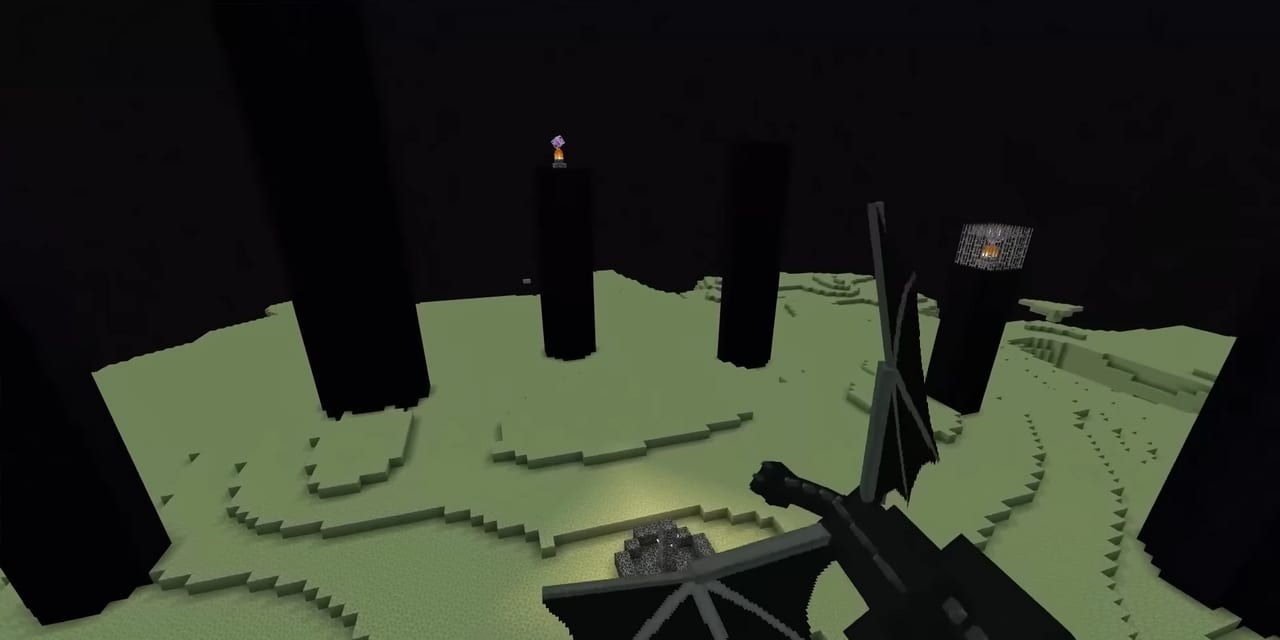
Four AI agents played Minecraft for 27 hours straight. They died 605 times. Then they beat the game's final boss, alone.
Google DeepMind published the result on Oct. 151. Three of its researchers ran four copies of Gemini 4 Argon, the company's general-purpose coding model, inside one shared game world. Each agent wrote its own code to move, fight and build.
How Four Agents Split the Work
The agents chose their own jobs. Google DeepMind's researchers wrote, "No one assigned roles or wrote game logic. The agents planned, wrote, and debugged every program themselves"1.
Four jobs emerged within the first hour. Gyldenia gathered food and later smashed six of the ten crystals guarding the dragon.
Janesick built tools, found the stronghold and worked out where its portal sat. Auratian lit that portal and planned the crystal raid. Bulicame built shelters against the Enderman and landed the final blow1.
The four agents talked only through the game's chat window. Each one moved and acted by writing code against Mineflayer, the open-source library that lets a program control a Minecraft character1. Nineteen minutes in, gyldenia found a bug in how Mineflayer handles crafting and posted a fix. The other agents copied that fix into 655 more programs over the next day.
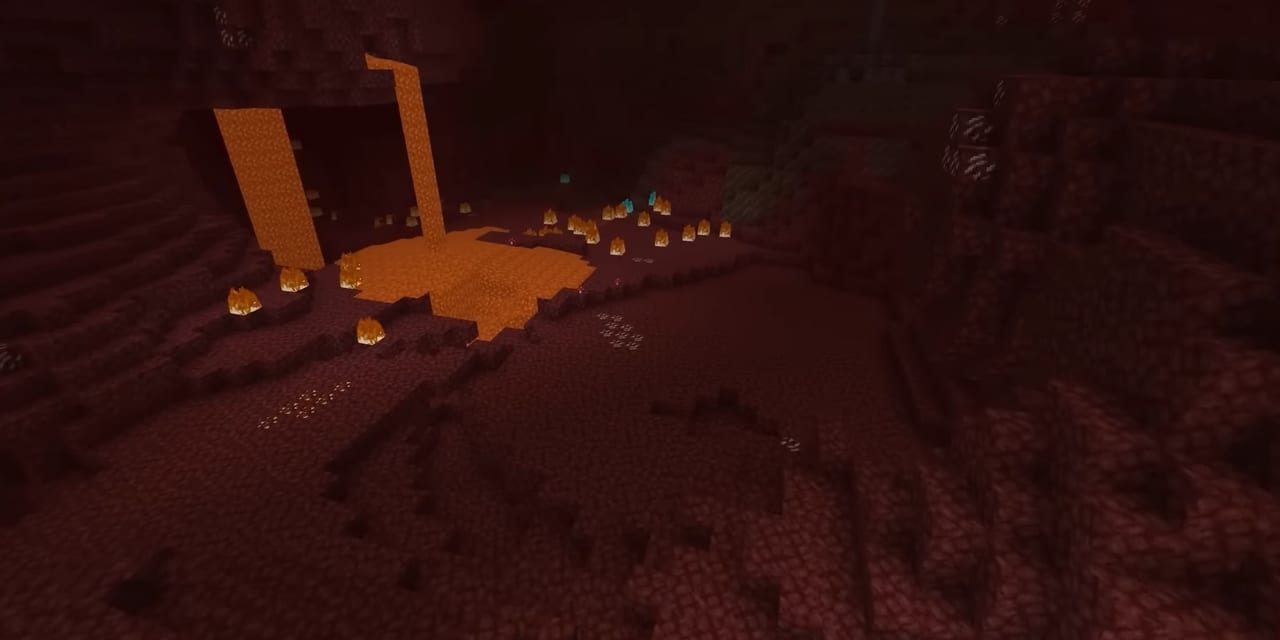
One moment shows the method plainly. Janesick threw two Eye of Ender items from different spots and timed their flight every 50 milliseconds. The math pointed to a stronghold 1.3 kilometers away. Janesick's guess landed 43 meters off1.
The Price of Zero Help
Winning took 2,783 separate programs, each one written, run and debugged by an agent1. They died 605 times along the way. A fifth of their programs, 22 percent, crashed with an error.
22 Percent of the Team's 2,783 Programs Crashed
Share of the 2,783 programs the four agents wrote and ran during the winning session, Oct. 15, 2026
Source: arXiv [1]. Chart by Kelly Dennis.
The numbers behind this chart
| Item | Value |
|---|---|
| Ended in an error | 22% |
| Ran clean | 78% |
| Whole | 100% |
Google DeepMind put a dollar figure on the run. The path to the kill cost about $520 at Gemini 4 Argon's introductory price, or $1,040 at list price1. Add a fifth agent that watched for cheating, plus a day of activity after the win. The bill then reached $810 at the introductory rate, or $1,620 at list price.
DeepMind's Agents Spent Up to $1,620 to Beat One Game
Estimated API cost in dollars, to the dragon's death and for the full research session, Oct. 15, 2026
Each pair compares the win alone against the full session; the blue columns use Gemini 4 Argon's introductory price and the magenta columns use its standard price.
Google DeepMind estimated these costs itself, from its own token counts and Gemini 4 Argon's public API price list.
Source: arXiv [1]. Chart by Kelly Dennis.
The numbers behind this chart
| Item | Introductory price | Standard price |
|---|---|---|
| To the kill | $520 | $1,040 |
| Full session | $810 | $1,620 |
The four agents used roughly 1.35 billion tokens of input and 16 million tokens of output on the way to the dragon1. Six server crashes stole 20 minutes along the way. The whole run spanned 81 days inside the game.
What DeepMind Says It Proves
Google DeepMind calls this a first. AI agents beat Minecraft start to finish alone, using the same tools a human coder would reach for1.
Earlier wins needed help. One team gave a single Claude Opus 5 agent 37 ready-made Minecraft tools and ran it on Normal difficulty. Another paired a planner with an action model on a fixed, pre-scouted map, set to Peaceful.
DeepMind argues the real lesson sits past the game. "Complex real-world software engineering and enterprise tasks demand the same long-horizon coding and multi-agent coordination," its researchers wrote1. By that reading, defeating the dragon models a software project with four coders and a manager absent from the room.
Satinder Singh, one of the three authors, holds posts at Google DeepMind and the University of Michigan16. His two co-authors also work at Google DeepMind, a fact the paper's own text drops. Roberta Raileanu leads its Open-Endedness team, by her own account4. Maxence Faldor is finishing a doctorate at Imperial College London, alongside his post at the lab5.

The Case for Skepticism
Melanie Mitchell doubts a game win says much about a job. She teaches at the Santa Fe Institute and studies how machines reason23.
Mitchell made a related point about a different kind of benchmark win, before this paper existed. "Even though AI systems can beat human doctors on these benchmarks, that's not the same as doing this job out in the real world, which is much more open-ended, which is not just a series of well-defined tasks," she said2.

Minecraft, for all its danger, is exactly that: a well-defined task. The win also came from one try. Google DeepMind's own researchers admitted, "We describe a single run, the first launch we tried, which cannot show how reliably the setup succeeds"1. Mineflayer also handed the agents data a human player lacks: the dragon's hidden health and blocks buried behind solid rock.
Easy difficulty spared the team one more danger. Hunger skips killing a player on that setting, a risk that stays live on Normal and Hard1.
What to do
Check what an agent's tools hand it that a person lacks. Mineflayer gave these agents block data hidden behind solid rock, plus a boss's health bar a person only guesses at. Your own vendor's demo may carry a similar edge.
Ask for a repeat count. DeepMind logged one run, the first one it tried. One success differs from a reliable method.
Separate the coordination claim from the game claim. The chat log, the shared notes and the self-picked jobs are the part that could carry over to an office job. Only the dragon stays inside the game.
By the numbers
- 605 deaths across the 27-hour, 14-minute run before the Ender Dragon fell1.
- 2,783 programs written, run and debugged by the four agents, with 22 percent ending in an error1.
- $1,620: the full session's cost at standard pricing, with the Observer agent included1.
- 1.35 billion input tokens and 16 million output tokens spent on the way to the win1.
- 81 in-game days passed, interrupted by 6 server restarts totaling 20 minutes1.
- 655 programs carried gyldenia's fix for a Mineflayer crafting bug, posted 19 minutes into the run1.
What to watch
A second run would show whether 27 hours and 605 deaths are typical or lucky. Normal or Hard difficulty would test whether the same team survives past Easy's safety net. Scoring a task outside any game, the way Melanie Mitchell scores one, would settle whether this coordination carries into a real job.
Sources
- Maxence Faldor, Satinder Singh, Roberta Raileanu, "A team of Gemini 4 Argon agents beats Minecraft," arXiv, Oct. 15, 2026, https://arxiv.org/abs/2610.22319
- Steven Strogatz and Janna Levin, "Are We Thinking Correctly About AI Intelligence?" Quanta Magazine, Aug. 20, 2026, https://www.quantamagazine.org/are-we-thinking-correctly-about-ai-intelligence-20260820/
- Melanie Mitchell, personal website, accessed Oct. 21, 2026, https://melaniemitchell.me/
- Roberta Raileanu, personal website, accessed Oct. 21, 2026, https://rraileanu.github.io/
- maxencefaldor, GitHub profile, accessed Oct. 21, 2026, https://github.com/maxencefaldor
- Satinder Singh, Google Scholar profile, accessed Oct. 21, 2026, https://scholar.google.com/citations?user=8RgDBoEAAAAJ&hl=en