
Peter Lee ran Microsoft Science for 16 years. He is leaving to advise Mercedes's Formula One team on AI. Fortune reported the move Oct. 12, 20261. The deal runs one year, with an option for a second1. Mercedes stayed silent on his exact title when the report ran2. For a recruiter tracking AI leadership, the move puts a price on a research career few companies can match.
Microsoft Science is the unit Lee shaped. It centers on health care delivery and medical research, by his own description below. The unit sits apart from Microsoft's Copilot and cloud product teams.

A second Big Tech exit to the pit lane
Lee joins a short list. Formula One has poached two frontier-lab leaders this year. Williams hired James Smith away from Google DeepMind in June 2026. The team named him chief information officer3. Smith had spent 10 years at Google and DeepMind. There, he built the data platform behind three billion Android devices3.

James Vowles, the Williams team principal, named the reason plainly. "Success in Formula 1 has always been about combining technological innovation with the best people to deliver on track," he said3.
Smith had co-founded a data startup called Human Native AI before the Williams offer. Cloudflare bought that startup earlier in 20263. Vowles wanted that exact mix of corporate research and founder instinct on his staff.
Mercedes followed four months later. Its hire carries a bigger budget line too. Formula One teams spent $769 million on technology last season. That figure runs 41 percent above the year before4.

Two Big Tech veterans left after 16 and 10 years for Formula One
Years spent at their prior employer before joining a Formula One team, 2026
Each column is one executive's tenure before the jump: the taller column is Peter Lee's 16 years at Microsoft, the shorter is James Smith's 10 years split between Google and DeepMind.
Sources: Fortune [1]; Williams Racing [3]. Chart by The AILately.com Desk.
The numbers behind this chart
| Item | Value |
|---|---|
| Lee (Mercedes) | 16 years |
| Smith (Williams) | 10 years |
Formula One pulled 2 frontier-lab leaders from Big Tech in 4 months
Announcement dates of senior Big Tech AI hires by Formula One teams, 2026
Each dot marks one hire's announcement date; four months separate Williams's pick of James Smith from Mercedes's pick of Peter Lee.
Sources: Fortune [1]; Williams Racing [3]. Chart by The AILately.com Desk.
The numbers behind this chart
| Date | Event |
|---|---|
| June 2, 2026 | Williams hires James Smith from DeepMind |
| Oct. 12, 2026 | Mercedes hires Peter Lee from Microsoft |
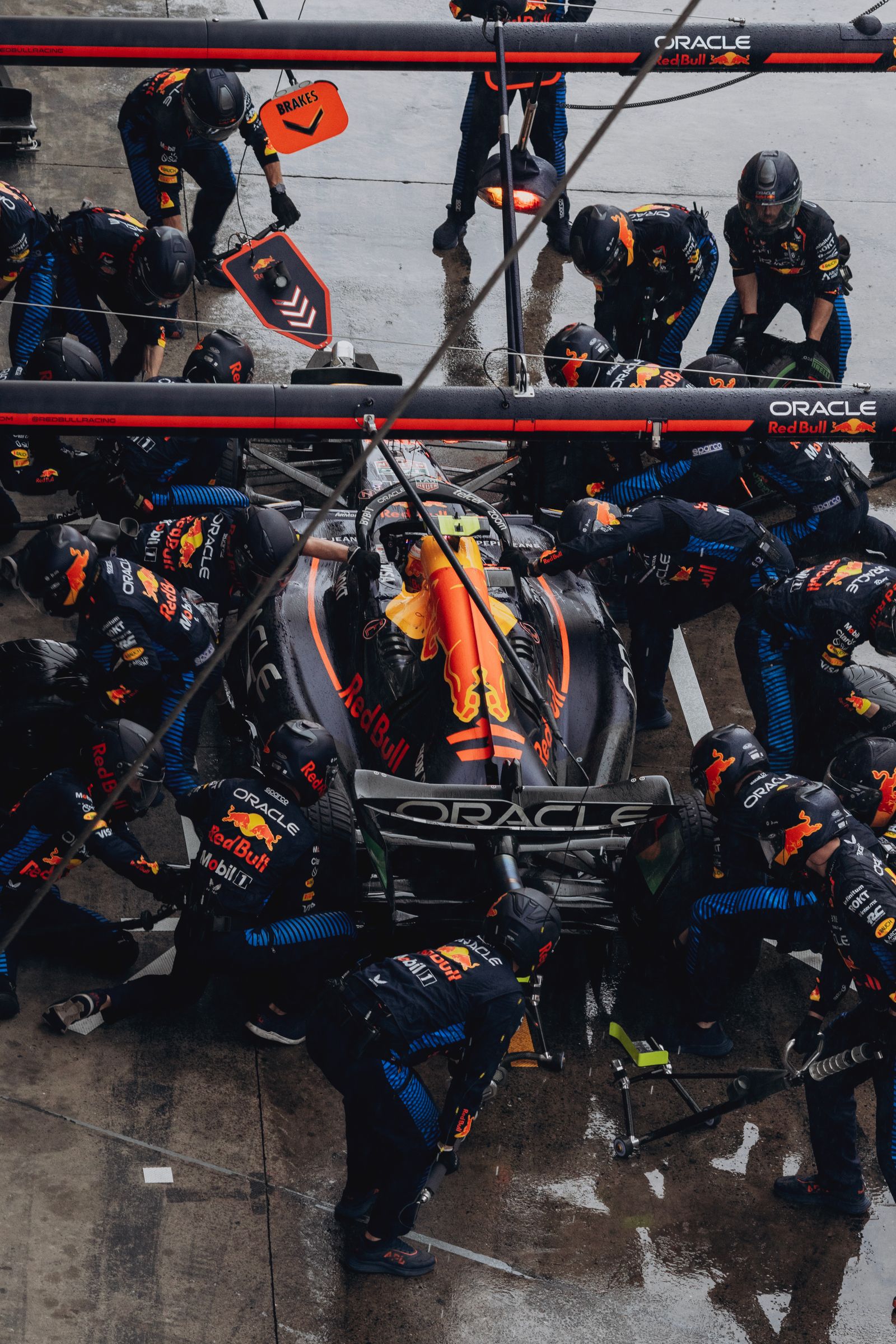
Eight new AI partnerships landed across the grid in the six months before Lee's move, The Next Web found4. Williams runs Anthropic's Claude for trackside data. McLaren runs Google's Gemini for race simulations. Red Bull runs Oracle for pit wall calls4.
For a recruiter pricing this kind of hire, the signal lands blunt. A 16-year research chief now costs what a front-running team spends on a technical director.
What Lee actually signs up to do
Grand Prix listed four jobs on Lee's new plate2. First, he points AI at physics problems inside the car. Those are the airflow and tire-wear puzzles engineers chase all season2. A small gain in either spot shows up in lap time within a single race weekend.
Second, he breaks down walls between departments that hoard their own data2. Aerodynamics, strategy and the factory floor often guard their own numbers inside a single team.
Third, he builds financial and predictive models for budget calls. Those calls run inside the sport's cost cap, a $135 million yearly spending limit2. The cap forces every team to prove a gain is worth its price before it spends. Fourth, he advises Mercedes on how regulators might govern AI inside the car and the garage2.
The fourth job sits inside a live fight. Power unit software already decides parts of races. Drivers want less of that influence, a tension the next section lays out5. Lee's regulatory brief puts him on the inside of that fight from day one.
Lee drew a straight line from his old job to his new one. "In both health care delivery and in medical research, and in Formula 1, you are oftentimes in collaborative situations where a group of very well-trained people are working together with a deficit of information and having to make highly consequential rapid decisions," he told Fortune1.
Personal history pulled him too. Lee said, "I have always wanted to be a racer. When I was young, I grew up racing carts. I'm completely thrilled, and I'm in disbelief that they would think of me for something like this," in the same Fortune interview1.
Microsoft's quieter season
Lee's exit joined a pattern already running inside Microsoft. Gaming chief Phil Spencer left earlier in 2026. Office executive Rajesh Jha left too. Security head Charlie Bell moved into an individual contributor role6. Four senior posts changed hands before Lee's name joined the list.
Ryan Roslansky ran LinkedIn for six years before taking charge of Microsoft 365. He announced his own exit days before Lee's6.
Roslansky gave a plain reason. "I know what it would take for me to lead the next phase of this work well: being in Redmond full time, every day. But my life and my family's life are here in the Bay Area," he said6.
LinkedIn grew from 700 million members to 1.3 billion under Roslansky. Its revenue climbed 11 percent in Microsoft's most recent fiscal year6. Lee is the fifth senior Microsoft leader to leave a top post in 2026. For a recruiter, five departures at the top in one year is a retention signal worth tracking on its own.
The case for paying up for AI expertise
Lee's own case rests on what a research career teaches. It teaches about decisions made under pressure. Formula One crews read sensors and call tire strategy inside seconds. That is the same compressed clock Lee says defines hard science.
His Fortune quote above makes the claim directly. It names deficits of information, well-trained teams, and decisions that carry weight fast.
McLaren already runs roughly 300 million race simulations per Grand Prix through its Gemini partnership, The Next Web reported4. That is the scale of work Lee says he wants organized across Mercedes's own departments. Ferrari's custom Amazon models run computational fluid dynamics 60 percent faster than before, the same outlet found4. Lee's pitch assumes gains like that, spread across every department at once.
Money backs the bet already. AI and cloud computing now rank among the top four sponsorship categories across the grid, the same outlet found4. That ranking shows real budget behind the hire, more weight than a single press release could carry alone.
The case against handing races to algorithms
McLaren driver Oscar Piastri sees a different machine already running the show. Qualifying outcomes now hinge on power unit software behaving correctly lap to lap, The Race reported5. Piastri called the result plain. "When you've got qualifying decided by computers behaving or misbehaving, it's a pretty crap way of going racing," he said5.

Teammate Lando Norris raised the same complaint. He pointed to a race decided by a stray button press5. Both drivers race under the same 2026 rules reset that widened AI's role inside the power unit, The Race reported5.
Their complaint lands squarely on Lee's bet. More AI leadership inside the garage could deepen a problem drivers already name. Mercedes is betting Lee untangles that problem before it grows.
For the recruiter reading both cases, price is the lesson here. Mercedes paid for a research record. That record still has to survive contact with a driver who wants fewer algorithms between him and the result.
By the numbers
- $769 million: Formula One teams' technology spending last season, 41 percent more than the year before4.
- 16 years: How long Peter Lee led Microsoft Science before his exit1.
- One year: The length of Lee's starting Mercedes contract, with an option for a second1.
- Four months: The gap between Williams's hire of James Smith in June and Mercedes's hire of Lee in October3.
- 10 years: James Smith's tenure at Google and DeepMind before Williams named him chief information officer3.
- Five: Senior Microsoft leaders, Lee included, who left top posts in 20266.
What to watch
Watch whether Mercedes gives Lee a title with a public scoreboard attached. Smith's first full season at Williams will show whether strategy calls actually improve. How fast Microsoft names a permanent successor will say how much the post still matters. A third team naming its own frontier-lab hire would turn this pair into a trend.
Sources
- Fortune Staff, "Exclusive: Microsoft's departing science president plans to join Mercedes F1 team as AI advisor," Fortune, Oct. 12, 2026, https://fortune.com/2026/10/12/microsoft-peter-lee-departing-science-president-plans-to-join-mercedes-f1-team-as-ai-advisor/
- Grand Prix Staff, "Microsoft science chief Lee to advise Mercedes on AI," Grand Prix, Oct. 13, 2026, https://www.grandprix.com/news/microsoft-science-chief-lee-to-advise-mercedes-on-ai.html
- Williams Racing Staff, "Atlassian Williams F1 Team appoints James Smith as Chief Information Officer," Williams Racing, June 2, 2026, https://www.williamsf1.com/articles/bd8df5eb-282c-4a8b-8a32-7f007309efd0/atlassian-williams-f1-team-appoints-james-smith-as-chief-information-officer
- Ana-Maria Stanciuc, "AI is now an F1 sponsor, a strategist, and a tech director. The race weekend has changed.," The Next Web, May 4, 2026, https://thenextweb.com/news/formula-one-ai-sponsorship-strategy-2026
- Jon Noble, "How F1 drivers have become hostages to AI in 2026," The Race, July 21, 2026, https://www.the-race.com/formula-1/how-f1-drivers-have-become-hostages-to-ai-in-2026/
- Cris Tolomia, "Ryan Roslansky leaving Microsoft amid executive departures," Quartz via Yahoo Finance, Oct. 1, 2026, https://finance.yahoo.com/technology/articles/ryan-roslansky-leaving-microsoft-amid-170416313.html