

SpaceX reported a $4.4 billion third-quarter profit on Oct. 20, its first since listing in June14.
In the same quarter it spent $19.6 billion on equipment and buildings. Over nine months, cash from operations covered 27 cents of every capital dollar. The IPO and new debt covered the rest.
SpaceX trades on the Nasdaq under the ticker SPCX1. Shares jumped in overnight trading after the report2. Anyone with an index fund, a retirement account or a brokerage account may already own a slice of it. Can a profitable SpaceX now pay for its own AI build?
What SpaceX Reported
Revenue rose 161 percent to $14.6 billion, and SpaceX now reports it across three businesses: Connectivity, Super Intelligence and Space1.
Super Intelligence is the AI and computing unit, home to the Grok models and the new Cursor coding business. Its revenue rose 830 percent to $7.6 billion. SpaceX credits new cloud contracts, the Cursor purchase and wider use of Grok.
Stock pay tied to the Cursor deal weighed on the quarter, and the unit still turned an operating profit. A year earlier it lost money.
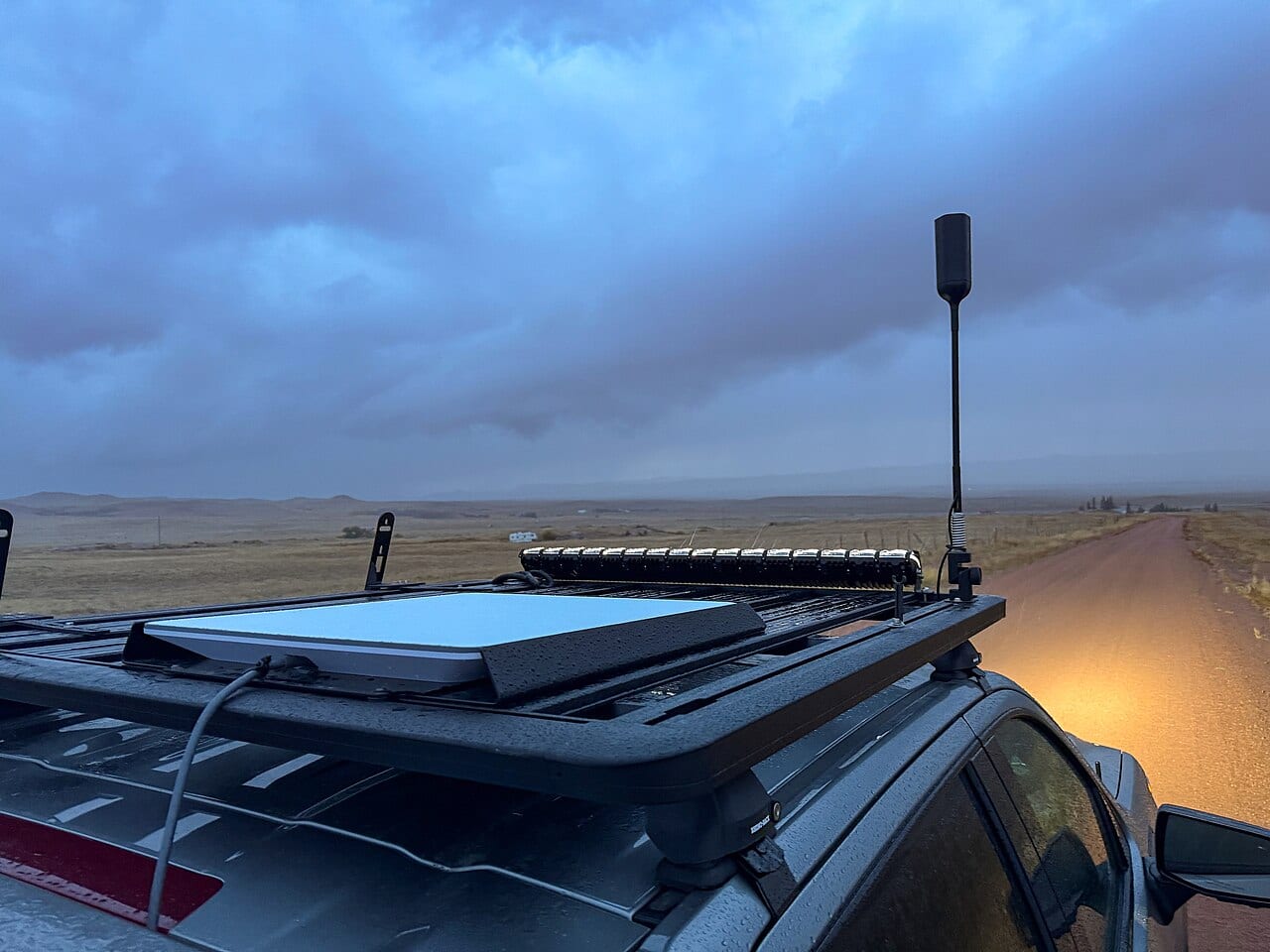
Connectivity, mostly Starlink, remains the steady earner. Its revenue rose 69 percent, and it earned $2.4 billion from operations16. The quarter also carried the first revenue-earning Starship flight.
Space, the launch unit that flies rockets for NASA and other customers, roughly broke even. All three units together turned an operating profit, a swing from a loss in the second quarter1.
Where the Money Went
The AI unit took 84 cents of every capital dollar in the third quarter1. Super Intelligence used $16.4 billion of the $19.6 billion. Connectivity spent $1.5 billion and Space spent $1.6 billion.
AI took $16.4 billion of SpaceX's $19.6 billion in third-quarter capital spending
SpaceX capital spending, July to September 2026, billions of dollars, from its earnings release
Each column is one segment's capital spending in the quarter; the magenta column is Super Intelligence, the AI unit.
Source: SEC EDGAR [1]. Chart by Ryan Elliott Dennis.
The numbers behind this chart
| Item | Value |
|---|---|
| Super Intelligence | $16.4B |
| Space | $1.6B |
| Connectivity | $1.5B |
The build keeps adding computing capacity, and the bill for it keeps growing1.
Over nine months, operations produced $13.1 billion of cash against $48.1 billion of purchases. That covered 27 percent of the bill. SpaceX still posted a net loss for the nine months. Both figures come from its cash flow statement.
Operations paid for $13.1 billion of the $48.1 billion SpaceX spent on equipment and buildings
SpaceX, first nine months of 2026, billions of dollars, from its cash flow statement
The short column is cash from operations; the tall magenta column is purchases of equipment and buildings.
Source: SEC EDGAR [1]. Chart by Ryan Elliott Dennis.
The numbers behind this chart
| Item | Value |
|---|---|
| Operating cash | $13.1B |
| Capital spending | $48.1B |
Who Paid the Difference
Investors paid most of it. SpaceX took in $85.7 billion from the June offering after fees1. Net financing for the nine months came to $99.8 billion. Debt was the smaller source.
Debt added $51.8 billion, and repayments took back $39.8 billion, a net $12.0 billion. Remember the IPO.
The IPO supplied $85.7 billion of the $99.8 billion SpaceX raised in nine months
SpaceX net cash from financing, January to September 2026, billions of dollars
One bar is nine months of net financing; each colored segment is one source, and the legend names them.
Source: SEC EDGAR [1]. Chart by Ryan Elliott Dennis.
The numbers behind this chart
| Item | Value |
|---|---|
| IPO, after fees | $85.7B |
| Net new debt | $12.0B |
| Everything else, net | $2.1B |
| Whole | $99.8B |
Chief financial officer Bret Johnsen named the sources on the Oct. 20 call2. “You have your operational cash flows, first and foremost,” he said. “You have multiple pools of capital available in the debt market, especially because of our investment grade status and strong balance sheet.”
On Sept. 30, SpaceX held $51.3 billion in cash and $38.6 billion in marketable securities1. That is $89.9 billion in all, up from $24.7 billion in cash in December. Debt and leases stood below half of it.
Management guided fourth-quarter capital spending to $35 billion to $40 billion27. At that pace the reserve covers about two quarters of building1. Melissa Otto of S&P Global cited consensus figures4. They put capital spending at $197.4 billion in fiscal 2028 and debt at $350 billion in 2029.
The Case For and The Case Against
Bulls start with the order book. SpaceX ended the quarter with a $63 billion backlog7. Johnsen said about $42 billion of it turns into revenue within a year. Guidance for next quarter is more than double the latest revenue, and the year-end run-rate goal stands2.
ARK Investment Management's chief futurist, Brett Winton, wrote on X that Musk's run-rate ambition sits near ARK's own model2. “$500b+ in ARR by end of 27 sounds a lot, but it's not that far ahead of our expectations,” he said. Gene Munster of Deepwater Asset Management went further after the call. “The stars are lining up for Elon to fully realize his vision of $SPCX being a vertical AI company, with the odds of a $TSLA merger increasing,” he wrote.
SpaceX and Tesla have each formed committees of independent directors to study a merger2. Musk cooled the talk of a sure deal on the call. “I think some people out there assume that a SpaceX and Tesla merger is a certainty, and I think that would be overstating it,” he said.

Skeptics start with the price. Nicolas Owens of Morningstar wrote before the June listing3. “With talk of an IPO that would peg SpaceX’s market capitalization at north of $1.5 trillion, we are likely to view the shares as overvalued in almost any scenario, at least in the near term,” he wrote.
Gordon Johnson of GLJ Research points to the cash line2. He noted a 50 percent drop in cash over one quarter, to roughly $50 billion. Another raise is coming in the fourth quarter, he expects.
That count uses cash alone, and SpaceX also holds $38.6 billion in securities1. Johnson's larger point still holds, because two quarters of building would use most of the reserve2.
Advocates need the backlog to turn into cash before borrowing resumes. Critics need spending to keep outrunning operating cash, which the nine-month figures already show. The next two filings will show which side the numbers favor.
What to do
- Read the next cash flow statement. Find cash from operations and purchases of equipment in the quarterly filing1. Divide the first by the second to see whether coverage beats 27 percent.
- Track new financing. Watch the filings for the roughly $40 billion in financing SpaceX reportedly sought for Nvidia chips5. Interest cost shows the price of any new debt.
- Look up your own stake. Open your fund or brokerage page and see what share of it SPCX holds. The stock fell in October before the earnings jump2.
By the numbers
- Revenue: third-quarter sales rose 161 percent to $14.6 billion, from $5.6 billion a year earlier1.
- Net income: the quarter earned $4.4 billion, against a $1.1 billion loss a year earlier1.
- Capital spending: Super Intelligence took $16.4 billion of the quarter's $19.6 billion, or 84 percent1.
- Nine-month coverage: operations paid $13.1 billion toward $48.1 billion of spending, or 27 percent1.
- IPO proceeds: the offering netted $85.7 billion of the $99.8 billion raised in nine months1.
- Reserve: cash and securities totaled $89.9 billion on Sept. 301.
- Guide: fourth-quarter capital spending is set at $35 billion to $40 billion2.
- Backlog: orders stand at $63 billion, with about $42 billion due as revenue within a year7.
What to watch
- The Tesla committees. Independent directors at both companies are reviewing a merger2.
- Fourth-quarter capital spending. Compare the result with the guide2.
- A new raise. Watch for debt or share sales before the fourth-quarter report25.
Sources
- Space Exploration Technologies Corp., "SpaceX Reports Third Quarter 2026 Results (Form 8-K, Exhibit 99.1)," SEC EDGAR, Oct. 20, 2026, https://www.sec.gov/Archives/edgar/data/1181412/000162828026066482/spaceexplorationtechnologi.htm
- Deepti Sri, "SPCX Stock Jumps Overnight: Musk Teases $1 Trillion Revenue By 2028 — Analyst Sees 95% Tesla Merger Odds In 2 Years," Stocktwits, Oct. 20, 2026, https://stocktwits.com/news-articles/markets/equity/spcx-stock-musk-1-trillion-revenue-2028-analyst-tesla-merger-odds-2-years/cZxtmj9RBHi
- Nicolas Owens, "SpaceX: What Investors Need to Know About Its Enormous Upcoming IPO," Morningstar, June 1, 2026, https://www.morningstar.com/stocks/spacex-what-investors-need-know-about-its-enormous-upcoming-ipo
- Amanda Gerut, "SpaceX posts first operating profit as public company as AI revenue nearly triples to $7.6 billion—cruising past Starlink," Fortune, Oct. 20, 2026, https://fortune.com/2026/10/20/spacex-q3-profit-ai-si-elon-musk/
- Adam Levy, "SpaceX Wants $40 Billion in New Debt, and It'll Need Hundreds of Billions More to Achieve Musk's Vision," The Motley Fool, Oct. 13, 2026, https://www.fool.com/investing/2026/10/13/spacex-wants-40-billion-in-new-debt-and-itll-need/
- Quartz, "SpaceX Q3 2026 earnings show revenue up 161% to $14.6 billion," Quartz, Oct. 20, 2026, https://qz.com/spacex-earnings-revenue-net-income-super-intelligence-starlink-102026
- MarketBeat, "What SpaceX (SPCX) Said on Its Q3 Earnings Call," MarketBeat, Oct. 20, 2026, https://www.marketbeat.com/instant-alerts/transcript-what-spacex-spcx-said-on-its-q3-earnings-call-2026-10-20/